SEOUL, South Korea (AP) — They began a pilgrimage that thousands before them have done. They boarded long flights to their motherland, South Korea, to undertake an emotional, often frustrating, sometimes devastating search for their birth families.
These adoptees are among the 200,000 sent from South Korea to Western nations as children. Many have grown up, searched for their origin story and discovered that their adoption paperwork was inaccurate or fabricated. They have only breadcrumbs to go on: grainy baby photos, names of orphanages and adoption agencies, the towns where they were said to have been abandoned. They don’t speak the language. They’re unfamiliar with the culture. Some never learn their truth.
Click to Gallery
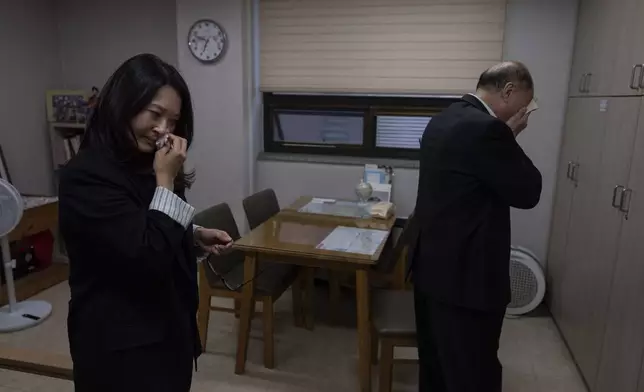
Adoptee Nicole Motta, left, and her birth father, Jang Dae-chang, wipe tears after an emotional reunion at the Eastern Social Welfare Society in Seoul, Friday, May 31, 2024. The moment they hugged, Motta, adopted to the United States in 1985, didn’t need DNA test results, she knew she’d come from this man. “I am a sinner for not finding you,” he said. “I think I have your nose,” Motta said softly. They both sobbed. (AP Photo/Jae C. Hong)
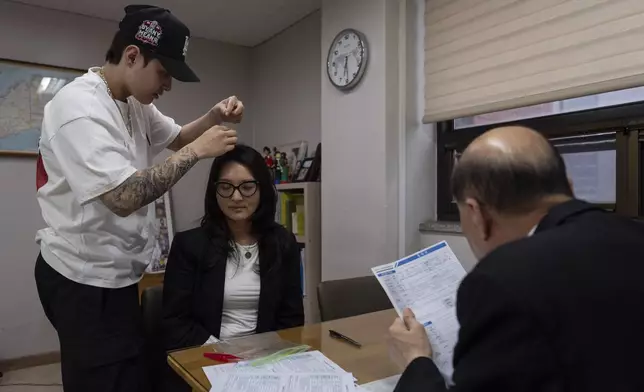
Nicole Motta’s son, Adler, collects hair samples from his mother for a DNA test as her birth father, Jang Dae-chang, reviews the paperwork at the Eastern Social Welfare Society in Seoul, South Korea, Friday, May 31, 2024. The two were reunited for the first time since she was adopted by a family in Alabama, United States, in 1985. (AP Photo/Jae C. Hong)
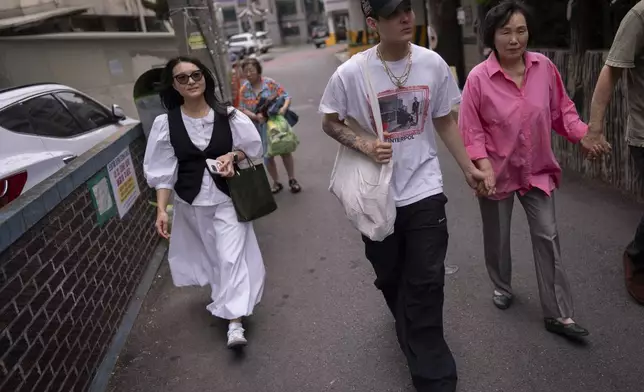
Nicole Motta, left, an adoptee visiting from Los Angeles to search for her birth family, visits the neighborhood where she was born in Bucheon, South Korea, Thursday, May 30, 2024. Her son, Adler, second from left, walks alongside long-time resident An Bok-rye who is helping with her search. (AP Photo/Jae C. Hong)
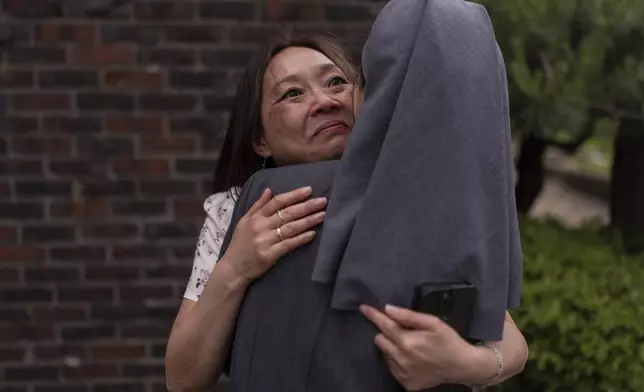
Maja Andersen, an adoptee visiting from Denmark to search for her birth family, hugs Sister Christina Ahn at Star of the Sea orphanage in Incheon, South Korea, Monday, May 20, 2024, while visiting the facility to look for details of her adoption. She had loved being hugged, the orphanage documents said, and had sparkling eyes. “Thank you so much, thank you so much,” Andersen repeated in a trembling voice. There was comfort in that, she had been hugged, she had smiled. (AP Photo/Jae C. Hong)
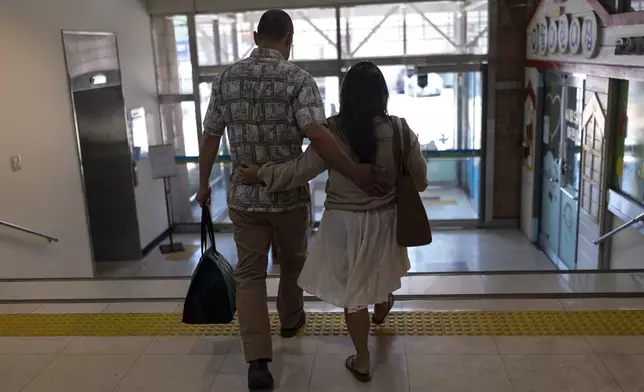
Kenneth Barthel, left, who was abandoned and later adopted to the United States at 6 years old, and his wife, Napela, comfort each other as they leave the Busan Metropolitan City Child Protection Center in Busan, South Korea, Friday, May 17, 2024, after searching for documents that could lead to finding his birth family. (AP Photo/Jae C. Hong)
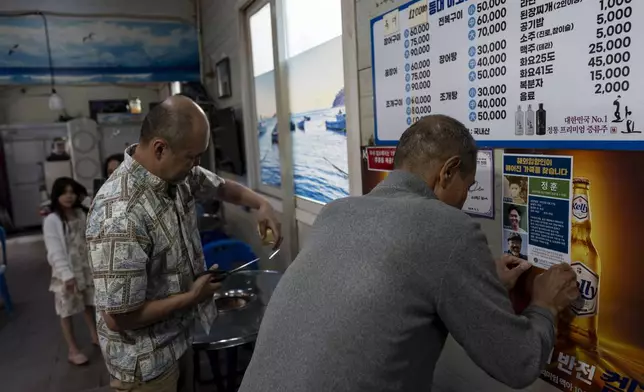
Kenneth Barthel, left, helps Shin Byung-chul post a flyer with photos of Barthel at various ages in his life, on the wall of his restaurant in Busan, South Korea, Friday, May 17, 2024, as Barthel’s daughter, Amiya, rear, looks on. Barthel’s mother had ordered him soup in a restaurant in the area when he was 6 years old, went to the bathroom and never returned. (AP Photo/Jae C. Hong)
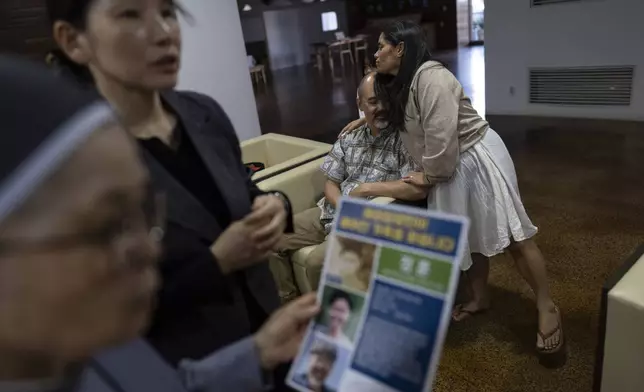
Kenneth Barthel, who was adopted by a single parent in Hawaii at 6 years old, is hugged by his wife, Napela, at the Sisters of Mary in Busan, South Korea, Friday, May 17, 2024. In the foreground, Sister Bulkeia, left, and Paek Kyeong-mi from Global Overseas Adoptees’ Link discuss a flyer designed to uncover the details of Barthel’s early life and find his birth family. (AP Photo/Jae C. Hong)
SEOUL, South Korea (AP) — They began a pilgrimage that thousands before them have done. They boarded long flights to their motherland, South Korea, to undertake an emotional, often frustrating, sometimes devastating search for their birth families.
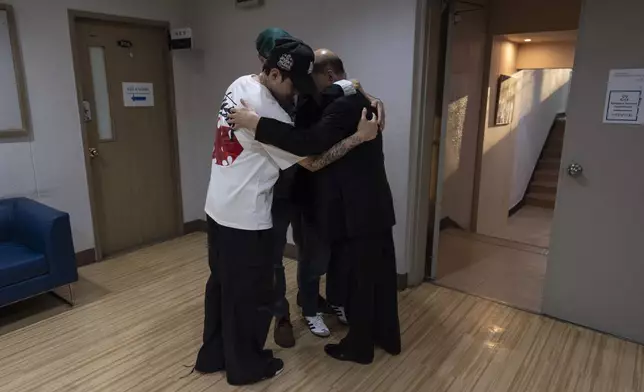
Jang Dae-chang hugs his daughter, Nicole Motta, and her family at the Eastern Social Welfare Society in Seoul on Friday, May 31, 2024, following their emotional first meeting. Motta, whose Korean name is Jang Hyeon-jung, was adopted by a family in Alabama, United States, in 1985. (AP Photo/Jae C. Hong)
Adoptee Nicole Motta, left, and her birth father, Jang Dae-chang, wipe tears after an emotional reunion at the Eastern Social Welfare Society in Seoul, Friday, May 31, 2024. The moment they hugged, Motta, adopted to the United States in 1985, didn’t need DNA test results, she knew she’d come from this man. “I am a sinner for not finding you,” he said. “I think I have your nose,” Motta said softly. They both sobbed. (AP Photo/Jae C. Hong)
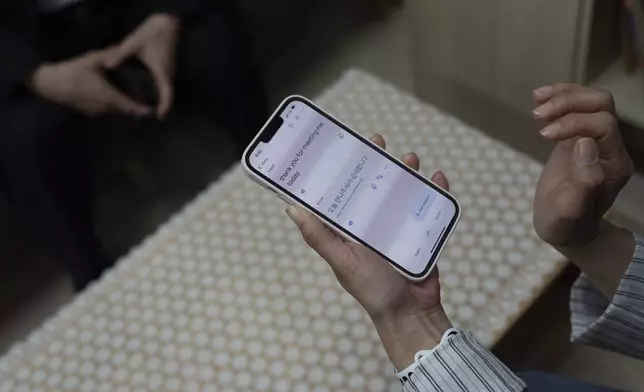
Nicole Motta, an adoptee visiting South Korea to look for her birth family, types “thank you for meeting me today,” on her smartphone to translate it into Korean, as she meets her birth father for the first time at the Eastern Social Welfare Society in Seoul, Friday, May 31, 2024. Motta’s adoption documents say her father was away for work for long stretches and his wife struggled to raise three children alone. (AP Photo/Jae C. Hong)
Nicole Motta’s son, Adler, collects hair samples from his mother for a DNA test as her birth father, Jang Dae-chang, reviews the paperwork at the Eastern Social Welfare Society in Seoul, South Korea, Friday, May 31, 2024. The two were reunited for the first time since she was adopted by a family in Alabama, United States, in 1985. (AP Photo/Jae C. Hong)

Nicole Motta, left, turns to see her birth father, Jang Dae-chang, as he enters the room at the Eastern Social Welfare Society in Seoul, South Korea, Friday, May 31, 2024, as they’re reunited for the first time since she was adopted in 1985 by a family in Alabama. (AP Photo/Jae C. Hong)
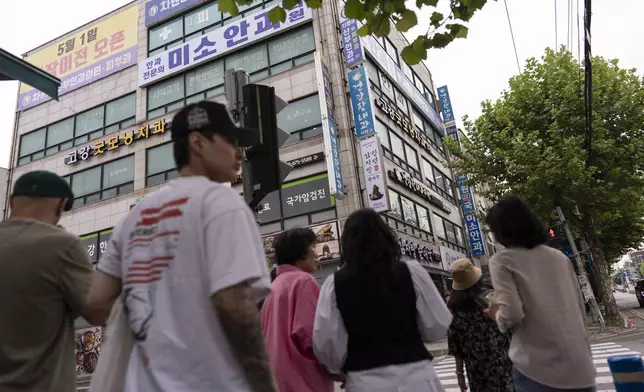
Nicole Motta, an adoptee visiting from Los Angeles to search for her birth family, visits Bucheon, South Korea, where she was born, Thursday, May 30, 2024. Many adoptees have grown up and are searching for their origin story. They have few details to go on. They don’t speak the language. They’re unfamiliar with the culture. (AP Photo/Jae C. Hong)
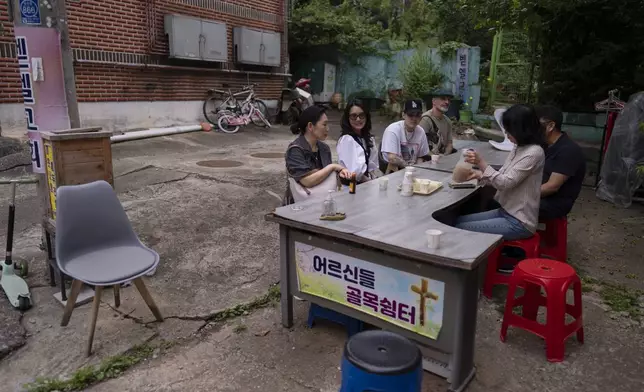
Nicole Motta, second from left, an adoptee visiting from Los Angeles, chats with Paek Kyeong-mi from Global Overseas Adoptees’ Link, during a break from searching for Motta’s birth family in Bucheon, South Korea, Thursday, May 30, 2024. (AP Photo/Jae C. Hong)
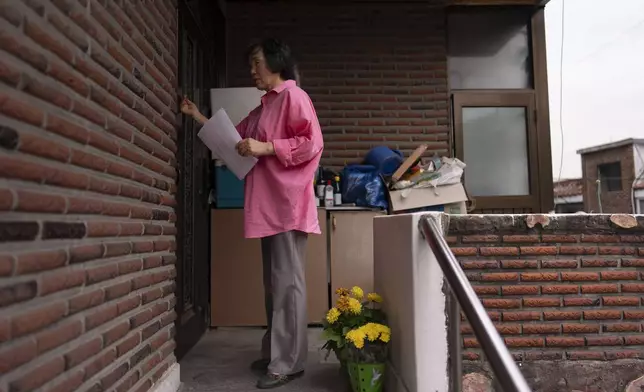
Holding a flyer asking for help to find adoptee Nicole Motta’s birth family, long-time resident An Bok-rye knocks on the door of an apartment building where Motta’s home once stood in Bucheon, South Korea, Thursday, May 30, 2024. Sympathetic residents, police officers and city workers of the towns where they once lived often try to assist adoptees searching for their origin story. (AP Photo/Jae C. Hong)
Nicole Motta, left, an adoptee visiting from Los Angeles to search for her birth family, visits the neighborhood where she was born in Bucheon, South Korea, Thursday, May 30, 2024. Her son, Adler, second from left, walks alongside long-time resident An Bok-rye who is helping with her search. (AP Photo/Jae C. Hong)
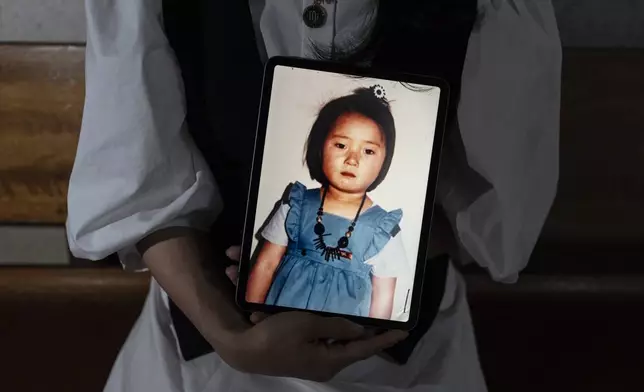
Nicole Motta, an adoptee visiting from Los Angeles, holds a tablet displaying a childhood picture, while traveling to search for her birth family in Yongin, South Korea, Thursday, May 30, 2024. Motta, whose Korean name is Jang Hyeon-jung, visited the site that used to be the orphanage where she stayed until her adoption. (AP Photo/Jae C. Hong)

The flag of South Korea is displayed at the Overseas Korean Adoptees Gathering in Seoul, South Korea, Tuesday, May 21, 2024. Korean adoptees have organized, and now they help those coming along behind them searching for their origin story. (AP Photo/Jae C. Hong)
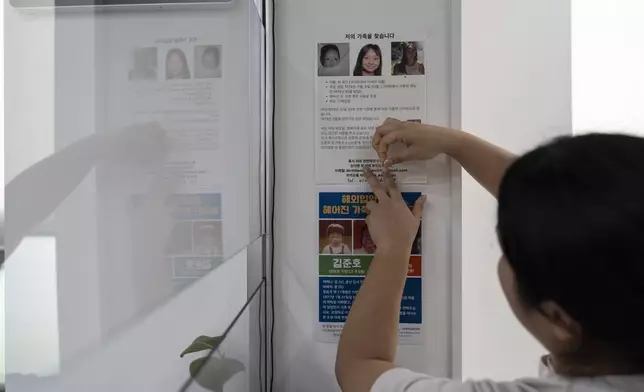
A city employee posts a flyer with photos of adoptee Maja Andersen from various ages in life and details about her birth search on the wall of a police station in Incheon, South Korea, Monday, May 20, 2024, above another left by an adoptee also searching for his roots. Andersen was adopted to a family in Denmark when she was an infant. (AP Photo/Jae C. Hong)
Maja Andersen, an adoptee visiting from Denmark to search for her birth family, hugs Sister Christina Ahn at Star of the Sea orphanage in Incheon, South Korea, Monday, May 20, 2024, while visiting the facility to look for details of her adoption. She had loved being hugged, the orphanage documents said, and had sparkling eyes. “Thank you so much, thank you so much,” Andersen repeated in a trembling voice. There was comfort in that, she had been hugged, she had smiled. (AP Photo/Jae C. Hong)
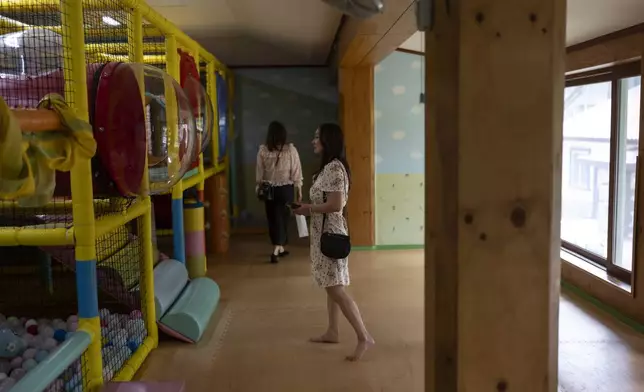
Maja Andersen, an adoptee visiting from Denmark to search for her birth family, visits the Star of the Sea Orphanage in Incheon, South Korea, Monday, May 20, 2024, where she stayed until her adoption at seven months old. She visited the facility to look for documents in hopes of finding her family. (AP Photo/Jae C. Hong)
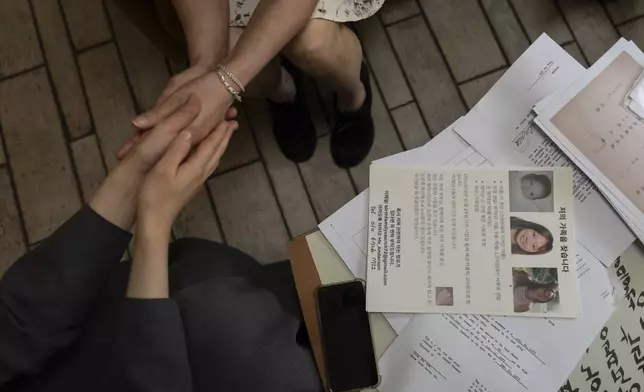
Maja Andersen, top, an adoptee visiting from Denmark to search for her birth family, holds the hands of Sister Christina Ahn at Star of the Sea orphanage in Incheon, South Korea, Monday, May 20, 2024, during her visit to look for documents in hopes of finding her family. She stayed at the facility until her adoption at seven months old. (AP Photo/Jae C. Hong)
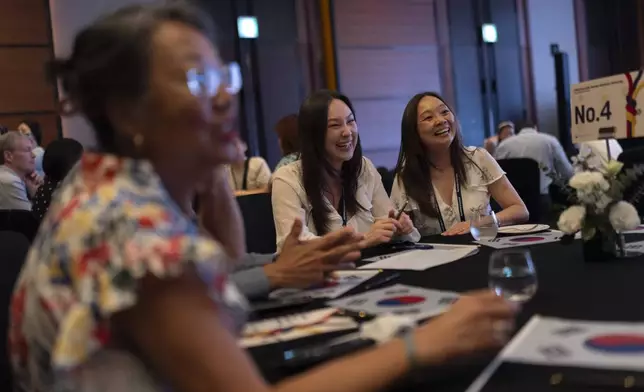
Maja Andersen, right, an adoptee visiting from Denmark to search for her birth family, and her daughter, Yasmin, attend the Overseas Korean Adoptees Gathering in Seoul, South Korea, Tuesday, May 21, 2024. (AP Photo/Jae C. Hong)
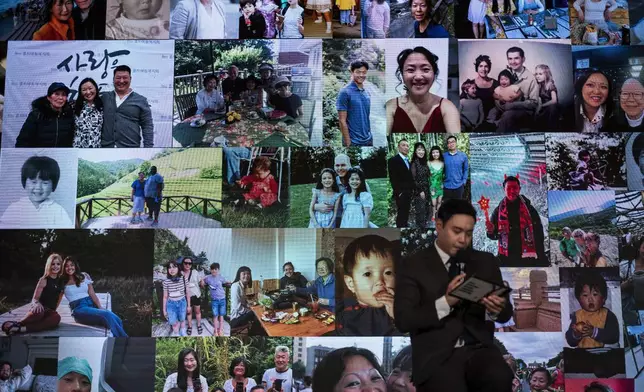
Photos of adoptees participating at the Overseas Korean Adoptees Gathering are displayed on a large screen during the conference in Seoul, South Korea, Tuesday, May 21, 2024. (AP Photo/Jae C. Hong)
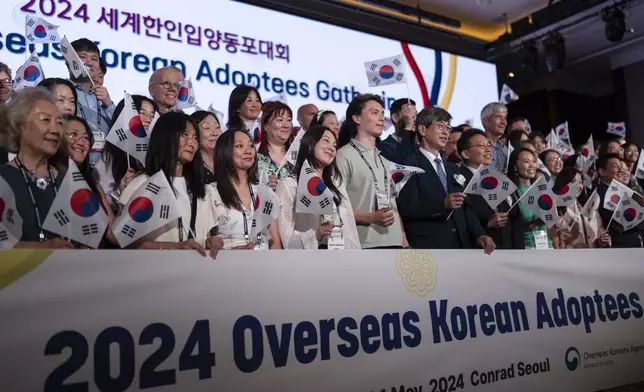
Maja Andersen, front row third from left, an adoptee visiting from Denmark to search for her birth family, holds a South Korean flag with others while taking a group photo at the Overseas Korean Adoptees Gathering in Seoul, South Korea, Tuesday, May 21, 2024. These adoptees are among the 200,000 sent away from Korea to Western nations as children. (AP Photo/Jae C. Hong)
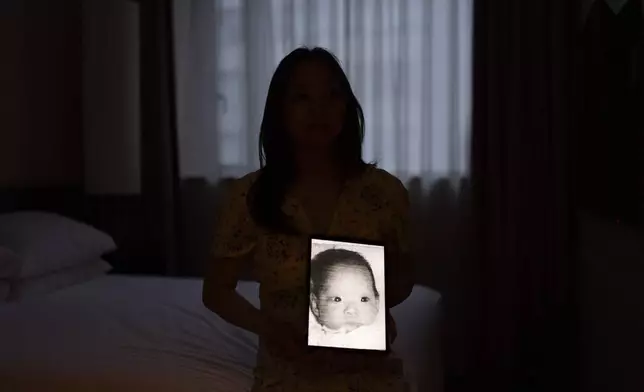
Maja Andersen sits for a photo in her hotel room, holding a tablet displaying her baby photo taken before her adoption to Denmark, as she visits Seoul, South Korea to search for her birth family, Monday, May 20, 2024. Andersen is among thousands of Korean adoptees who have taken a pilgrimage to their motherland for an emotional, often frustrating, sometimes devastating search for their origin story. (AP Photo/Jae C. Hong)
Kenneth Barthel, left, who was abandoned and later adopted to the United States at 6 years old, and his wife, Napela, comfort each other as they leave the Busan Metropolitan City Child Protection Center in Busan, South Korea, Friday, May 17, 2024, after searching for documents that could lead to finding his birth family. (AP Photo/Jae C. Hong)
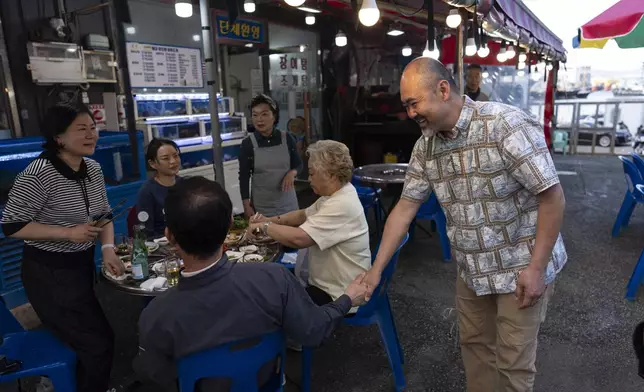
Kenneth Barthel, right, who was adopted to the United States at 6 years old, talks with diners in the neighborhood where he remembers being abandoned by his mother, in Busan, South Korea, Friday, May 17, 2024. Barthel was posting flyers in the area featuring his photos in the hopes of finding his birth family. (AP Photo/Jae C. Hong)
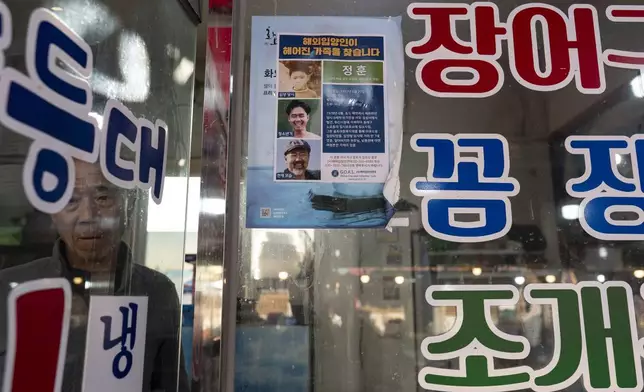
Restaurant owner Shin Byung-chul looks from behind a flyer he put up of Kenneth Barthel, who was abandoned in the area as a child and later adopted to Hawaii at 6 years old, at his restaurant in Busan, South Korea, Friday, May 17, 2024. Barthel has visited Korea four times to search for his birth family. (AP Photo/Jae C. Hong)
Kenneth Barthel, left, helps Shin Byung-chul post a flyer with photos of Barthel at various ages in his life, on the wall of his restaurant in Busan, South Korea, Friday, May 17, 2024, as Barthel’s daughter, Amiya, rear, looks on. Barthel’s mother had ordered him soup in a restaurant in the area when he was 6 years old, went to the bathroom and never returned. (AP Photo/Jae C. Hong)
Kenneth Barthel, who was adopted by a single parent in Hawaii at 6 years old, is hugged by his wife, Napela, at the Sisters of Mary in Busan, South Korea, Friday, May 17, 2024. In the foreground, Sister Bulkeia, left, and Paek Kyeong-mi from Global Overseas Adoptees’ Link discuss a flyer designed to uncover the details of Barthel’s early life and find his birth family. (AP Photo/Jae C. Hong)
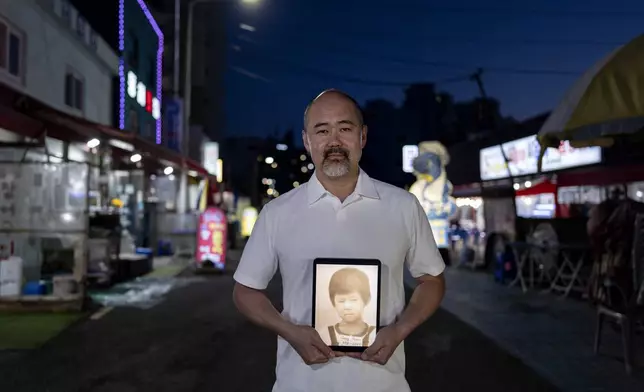
Kenneth Barthel, adopted from South Korea to Hawaii in 1979 at 6 years old, holds a tablet showing his childhood photo in Busan, South Korea, Thursday, May 16, 2024. Barthel is looking for his birth family in Busan where he believes he was abandoned when his mother ordered soup for him in a restaurant and never returned. (AP Photo/Jae C. Hong)
“I want my mother to know I’m OK and that her sacrifice was not in vain,” says Kenneth Barthel, adopted in 1979 at 6 years old to Hawaii.
He hung flyers all over Busan, where his mother abandoned him at a restaurant. She ordered him soup, went to the bathroom and never returned. Police found him wandering the streets and took him to an orphanage. He didn’t think much about finding his birth family until he had his own son, imagined himself as a boy and yearned to understand where he came from.
He has visited South Korea four times, without any luck. He says he’ll keep coming back, and tears rolled down his cheeks.
Some who make this trip learn things about themselves they’d thought were lost forever.
In a small office at the Stars of the Sea orphanage in Incheon, South Korea, Maja Andersen sat holding Sister Christina Ahn’s hands. Her eyes grew moist as the sister translated the few details available about her early life at the orphanage.
She had loved being hugged, the orphanage documents said, and had sparkling eyes.
“Thank you so much, thank you so much,” Andersen repeated in a trembling voice. There was comfort in that — she had been hugged, she had smiled.
She’d come here searching for her family.
“I just want to tell them I had a good life and I’m doing well,” Andersen said to Sister Ahn.
Andersen had been admitted to the facility as a malnourished baby and was adopted at 7 months old to a family in Denmark, according to the documents. She says she’s grateful for the love her adoptive family gave her, but has developed an unshakable need to know where she came from. She visited this orphanage, city hall and a police station, but found no new clues about her birth family.
Still she remains hopeful, and plans to return to South Korea to keep trying. She posted a flyer on the wall of a police station not far from the orphanage, just above another left by an adoptee also searching for his roots.
Korean adoptees have organized, and now they help those coming along behind them. Non-profit groups conduct DNA testing. Sympathetic residents, police officers and city workers of the towns where they once lived often try to assist them. Sometimes adoption agencies are able to track down birth families.
Nearly four decades after her adoption to the U.S., Nicole Motta in May sat across the table from a 70-year-old man her adoption agency had identified as her birth father. She typed “thanks for meeting me today” into a translation program on her phone to show him. A social worker placed hair samples into plastic bags for DNA testing.
But the moment they hugged, Motta, adopted to the United States in 1985, didn’t need the results — she knew she’d come from this man.
“I am a sinner for not finding you,” he said.
Motta’s adoption documents say her father was away for work for long stretches and his wife struggled to raise three children alone. He told her she was gone when he came back from one trip, and claimed his brother gave her away. He hasn’t spoken to the brother since, he said, and never knew she was adopted abroad.
Motta’s adoption file leaves it unclear whether the brother had a role in her adoption. It says she was under the care of unspecified neighbors before being sent to an orphanage that referred her to an adoption agency, which sent her abroad in 1985.
She studied his face. She wondered if she looks like her siblings or her mother, who has since died.
“I think I have your nose,” Motta said softly.
They both sobbed.
Associated Press journalist Claire Galofaro contributed to this report.
This story is part of an ongoing investigation led by The Associated Press in collaboration with FRONTLINE (PBS). The investigation includes an interactive and documentary, South Korea’s Adoption Reckoning. Contact AP’s global investigative team at [email protected].
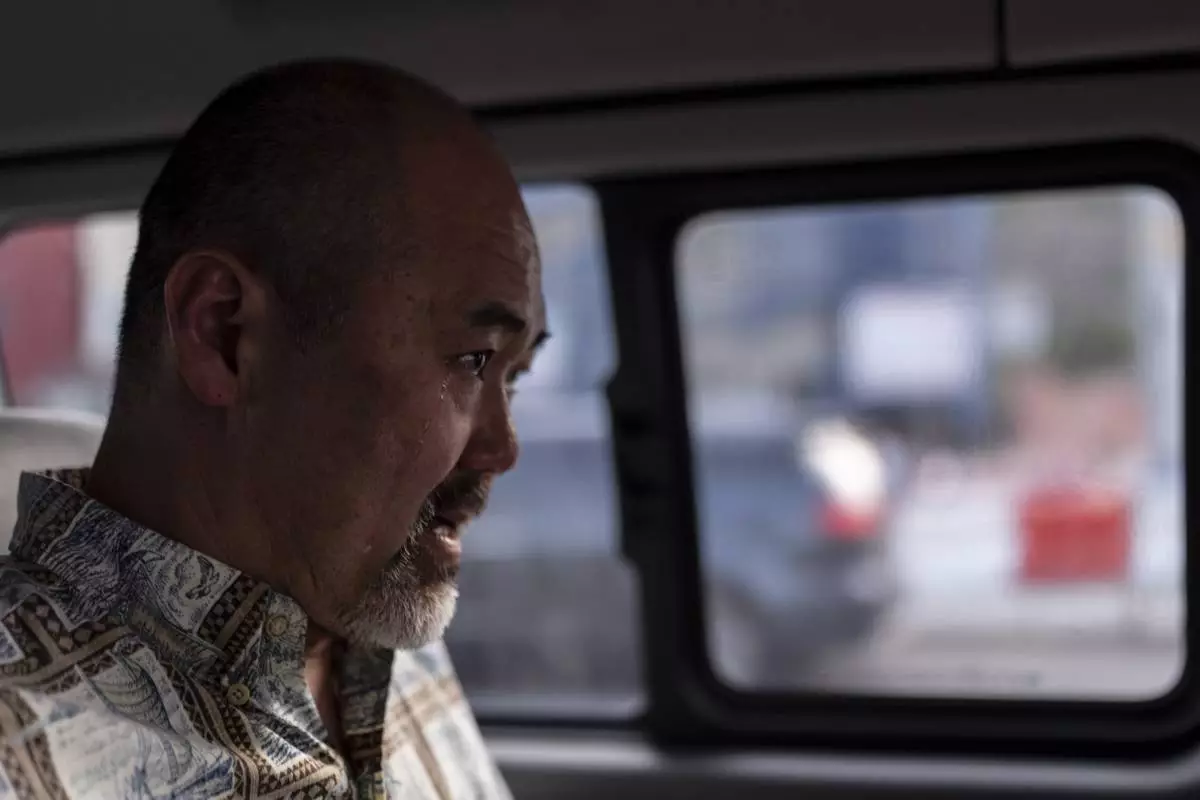
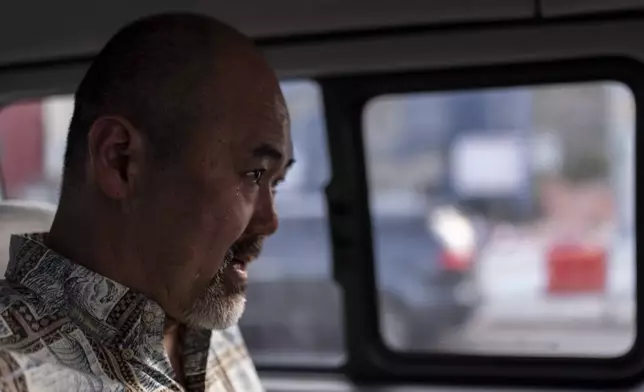
A teardrop rolls down the cheek of Kenneth Barthel, who was adopted from South Korea at the age of six, as he sits in a minivan in Busan, South Korea, Friday, May 17, 2024, after spending the day trying to uncover the details of his early life and find his birth family. (AP Photo/Jae C. Hong)
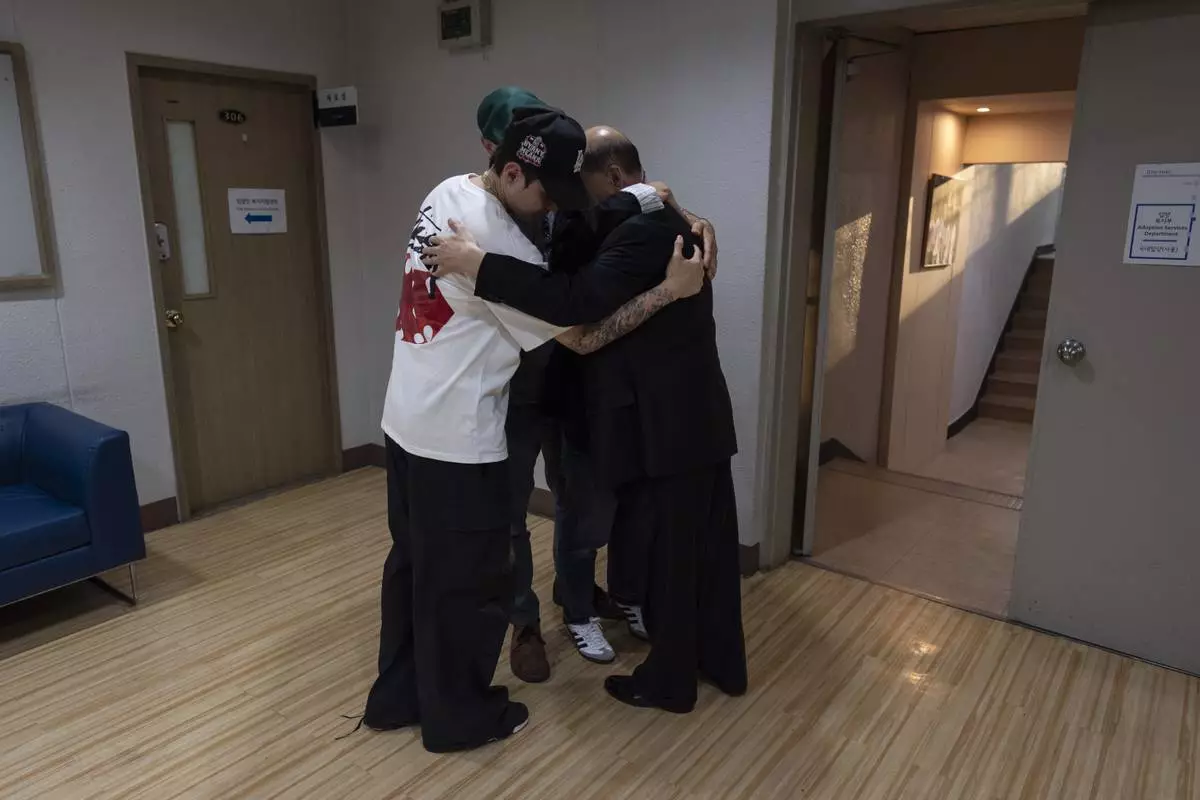
Jang Dae-chang hugs his daughter, Nicole Motta, and her family at the Eastern Social Welfare Society in Seoul on Friday, May 31, 2024, following their emotional first meeting. Motta, whose Korean name is Jang Hyeon-jung, was adopted by a family in Alabama, United States, in 1985. (AP Photo/Jae C. Hong)
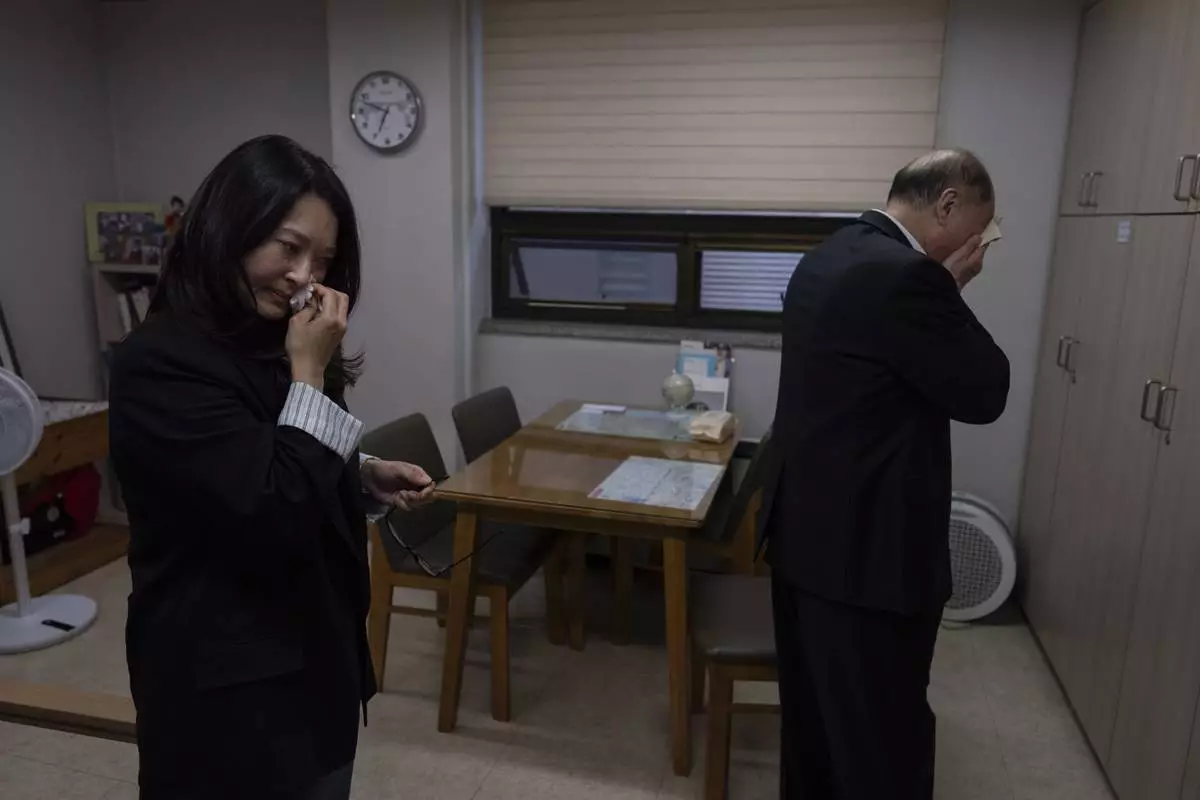
Adoptee Nicole Motta, left, and her birth father, Jang Dae-chang, wipe tears after an emotional reunion at the Eastern Social Welfare Society in Seoul, Friday, May 31, 2024. The moment they hugged, Motta, adopted to the United States in 1985, didn’t need DNA test results, she knew she’d come from this man. “I am a sinner for not finding you,” he said. “I think I have your nose,” Motta said softly. They both sobbed. (AP Photo/Jae C. Hong)
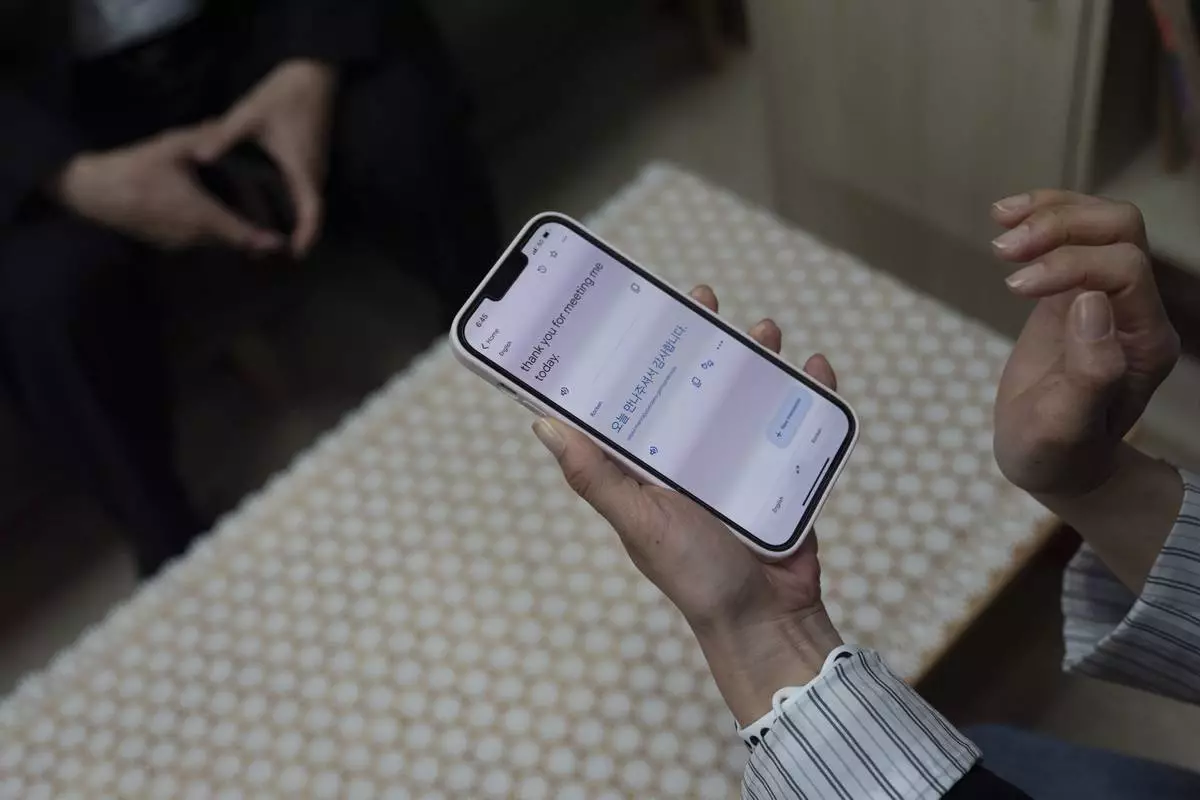
Nicole Motta, an adoptee visiting South Korea to look for her birth family, types “thank you for meeting me today,” on her smartphone to translate it into Korean, as she meets her birth father for the first time at the Eastern Social Welfare Society in Seoul, Friday, May 31, 2024. Motta’s adoption documents say her father was away for work for long stretches and his wife struggled to raise three children alone. (AP Photo/Jae C. Hong)
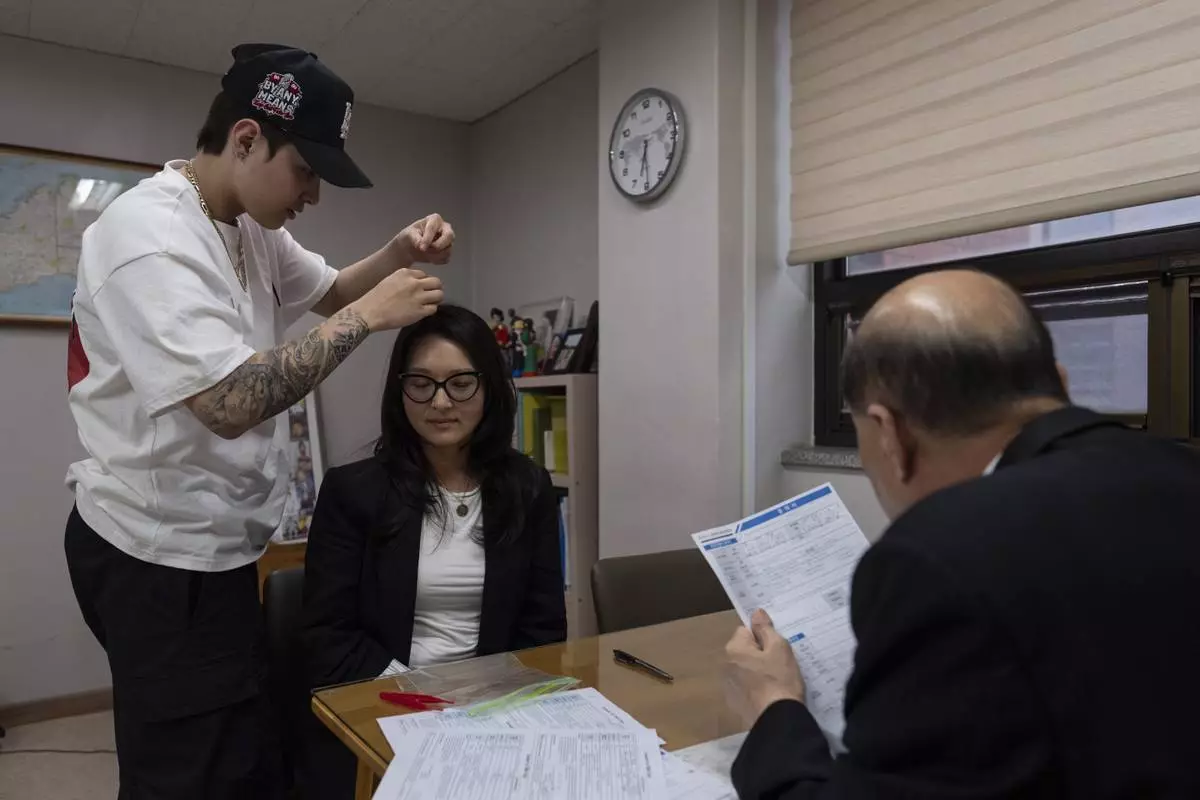
Nicole Motta’s son, Adler, collects hair samples from his mother for a DNA test as her birth father, Jang Dae-chang, reviews the paperwork at the Eastern Social Welfare Society in Seoul, South Korea, Friday, May 31, 2024. The two were reunited for the first time since she was adopted by a family in Alabama, United States, in 1985. (AP Photo/Jae C. Hong)
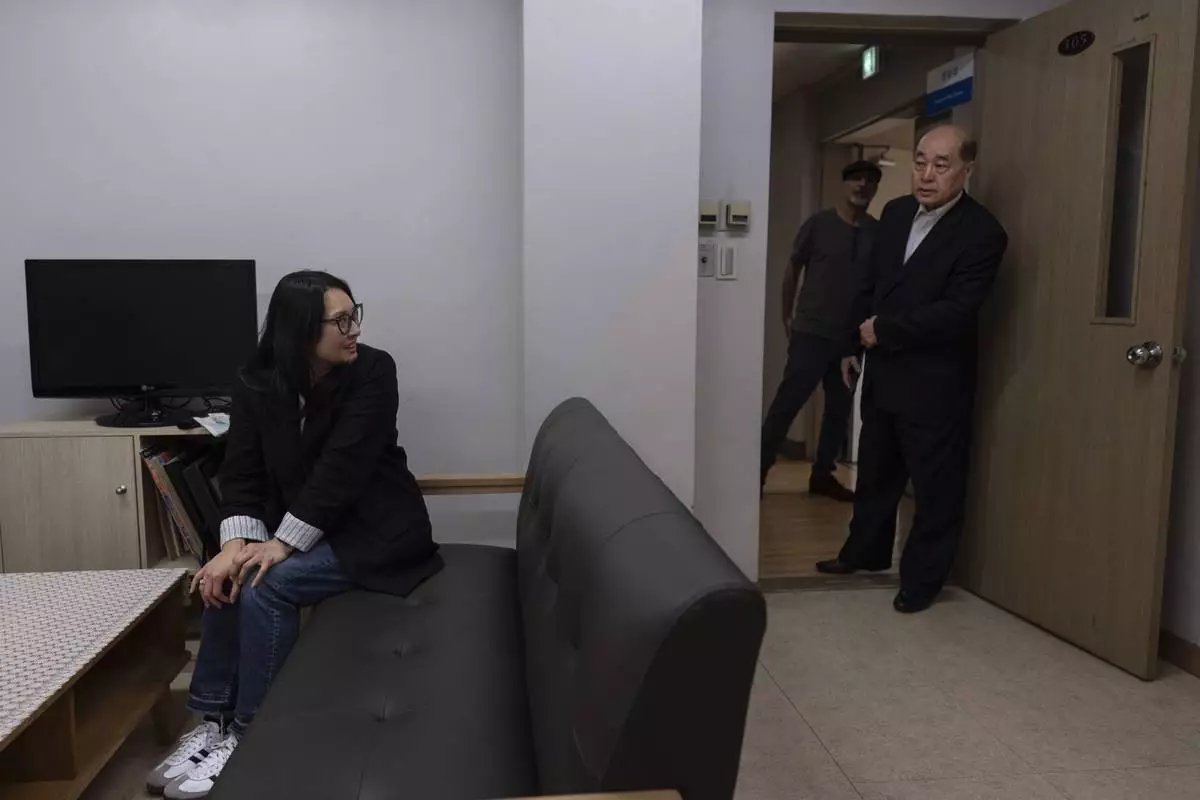
Nicole Motta, left, turns to see her birth father, Jang Dae-chang, as he enters the room at the Eastern Social Welfare Society in Seoul, South Korea, Friday, May 31, 2024, as they’re reunited for the first time since she was adopted in 1985 by a family in Alabama. (AP Photo/Jae C. Hong)
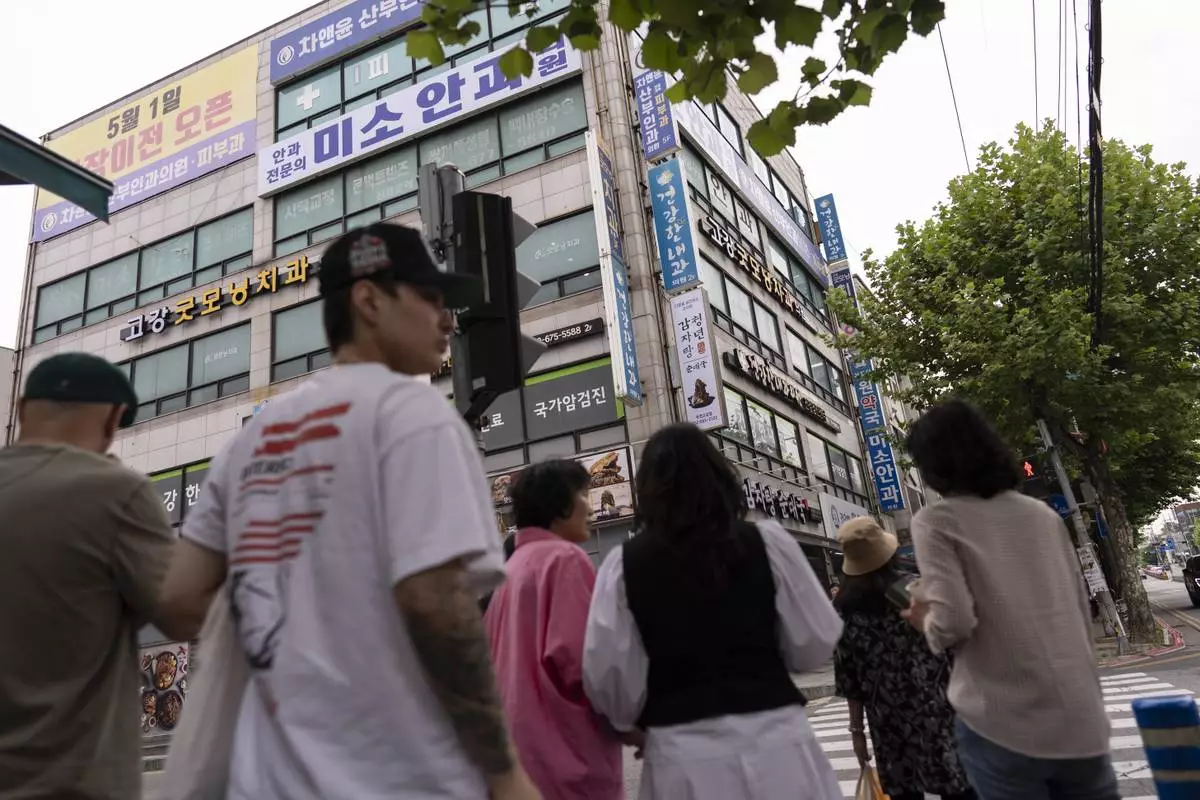
Nicole Motta, an adoptee visiting from Los Angeles to search for her birth family, visits Bucheon, South Korea, where she was born, Thursday, May 30, 2024. Many adoptees have grown up and are searching for their origin story. They have few details to go on. They don’t speak the language. They’re unfamiliar with the culture. (AP Photo/Jae C. Hong)
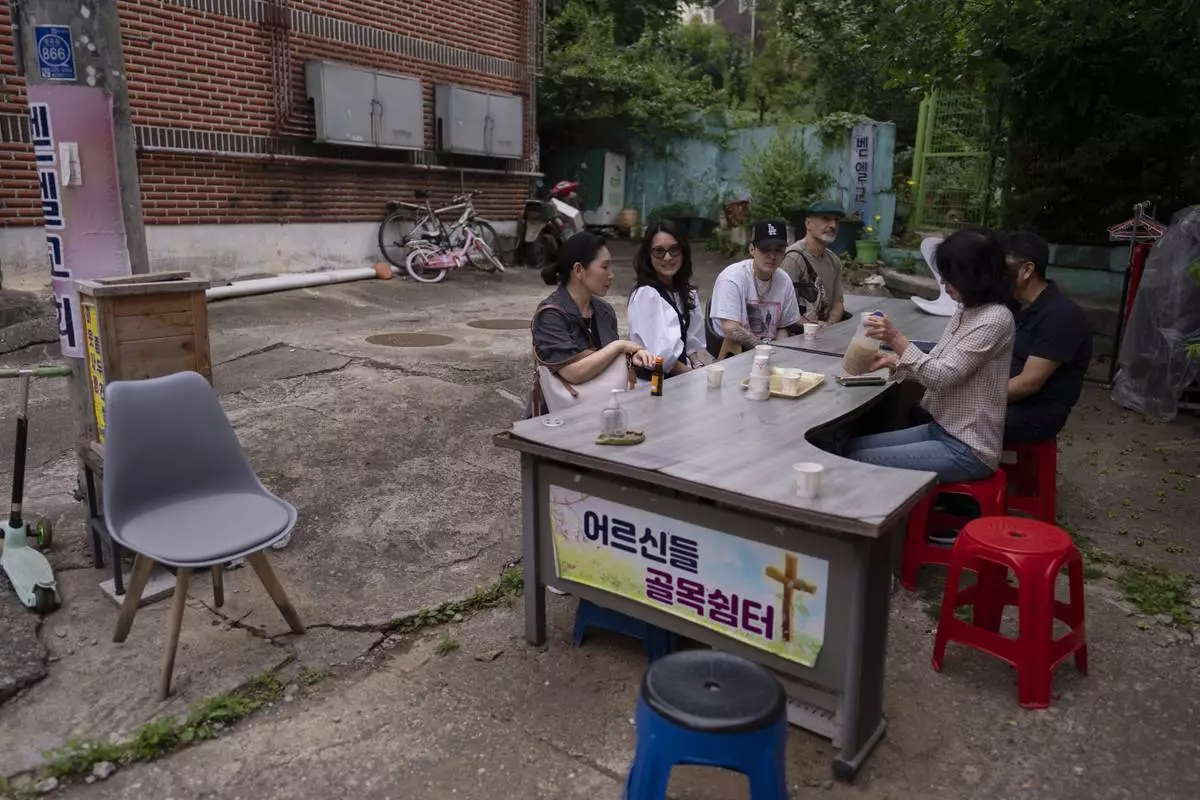
Nicole Motta, second from left, an adoptee visiting from Los Angeles, chats with Paek Kyeong-mi from Global Overseas Adoptees’ Link, during a break from searching for Motta’s birth family in Bucheon, South Korea, Thursday, May 30, 2024. (AP Photo/Jae C. Hong)
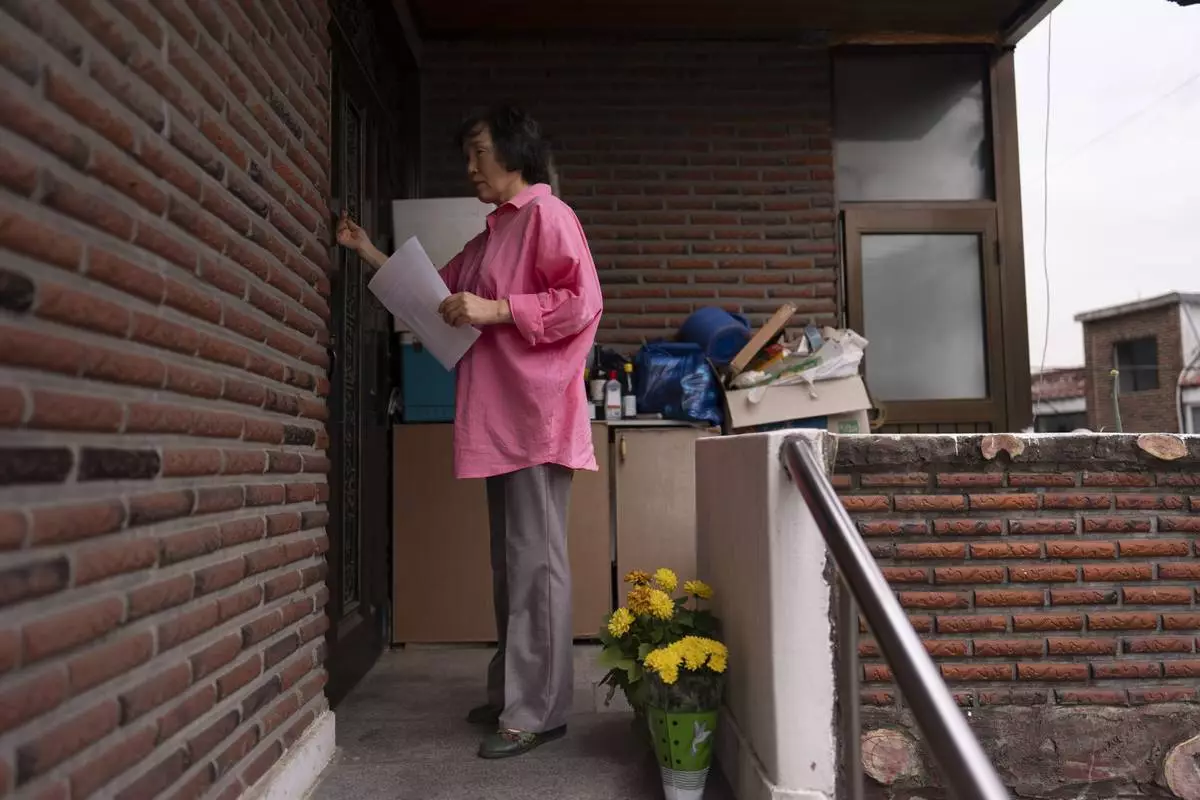
Holding a flyer asking for help to find adoptee Nicole Motta’s birth family, long-time resident An Bok-rye knocks on the door of an apartment building where Motta’s home once stood in Bucheon, South Korea, Thursday, May 30, 2024. Sympathetic residents, police officers and city workers of the towns where they once lived often try to assist adoptees searching for their origin story. (AP Photo/Jae C. Hong)
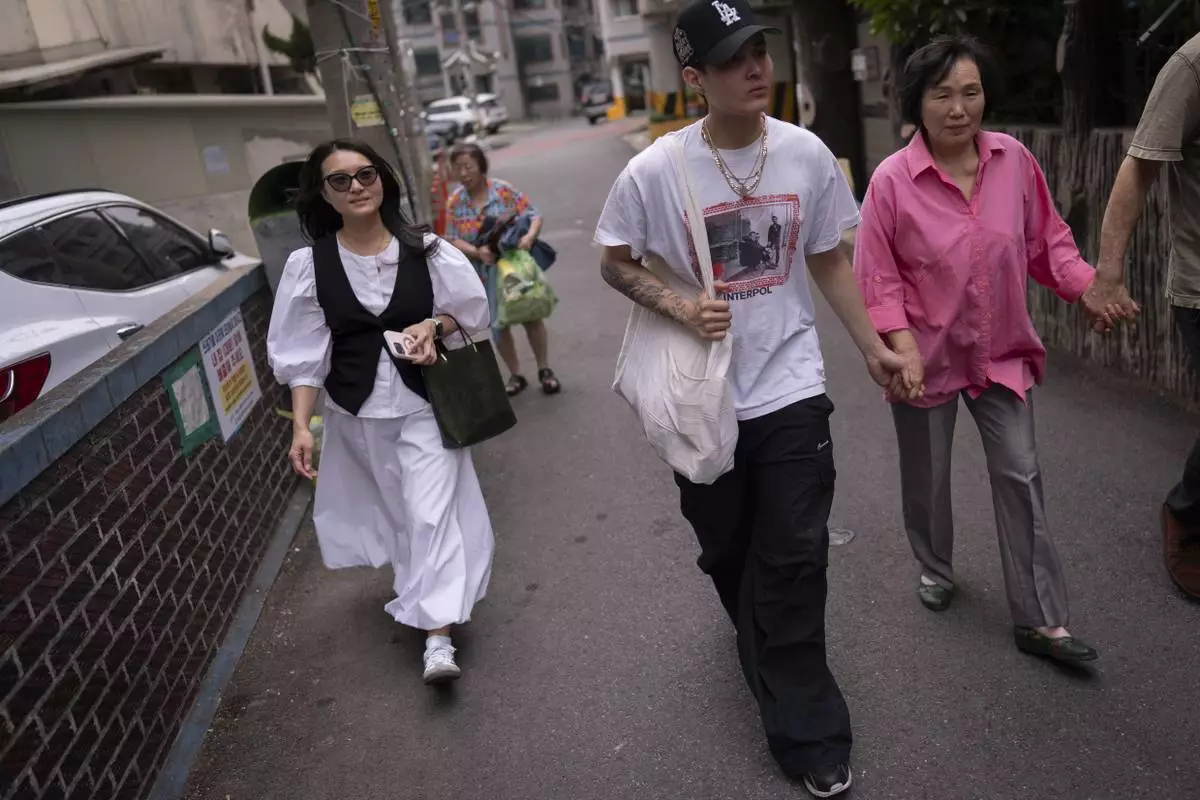
Nicole Motta, left, an adoptee visiting from Los Angeles to search for her birth family, visits the neighborhood where she was born in Bucheon, South Korea, Thursday, May 30, 2024. Her son, Adler, second from left, walks alongside long-time resident An Bok-rye who is helping with her search. (AP Photo/Jae C. Hong)
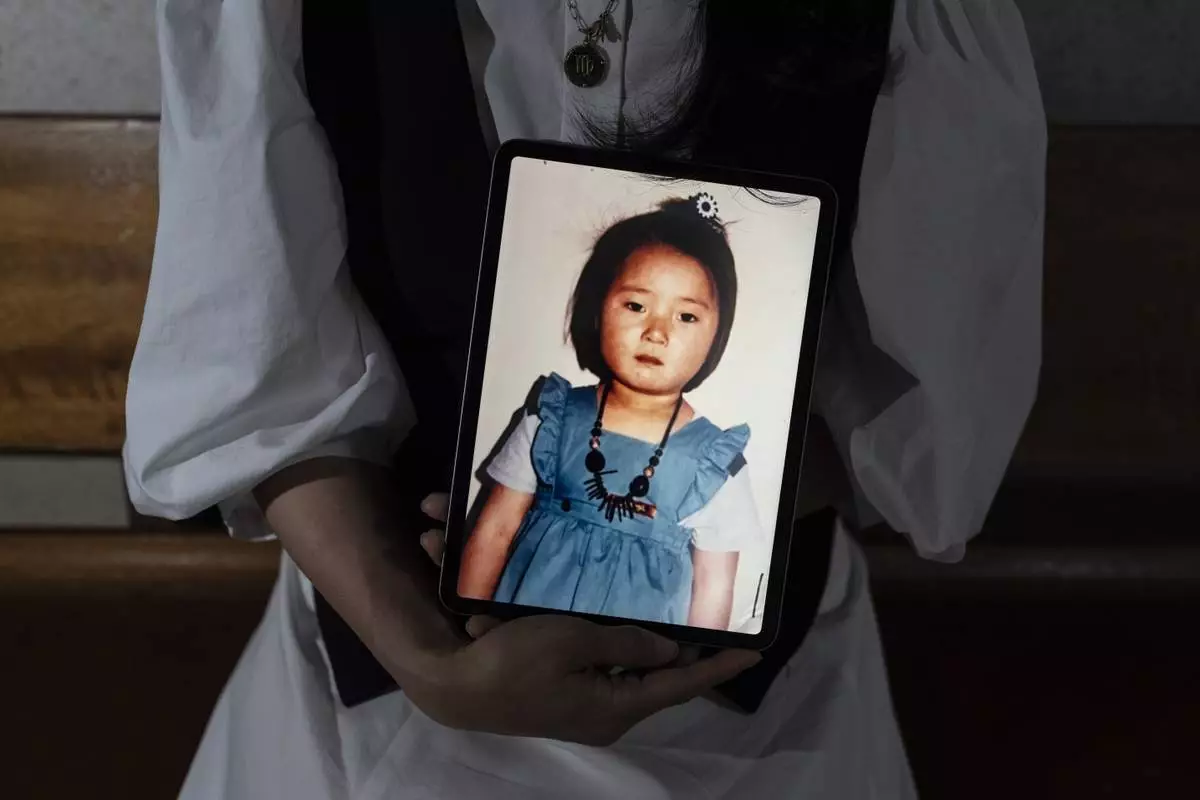
Nicole Motta, an adoptee visiting from Los Angeles, holds a tablet displaying a childhood picture, while traveling to search for her birth family in Yongin, South Korea, Thursday, May 30, 2024. Motta, whose Korean name is Jang Hyeon-jung, visited the site that used to be the orphanage where she stayed until her adoption. (AP Photo/Jae C. Hong)

The flag of South Korea is displayed at the Overseas Korean Adoptees Gathering in Seoul, South Korea, Tuesday, May 21, 2024. Korean adoptees have organized, and now they help those coming along behind them searching for their origin story. (AP Photo/Jae C. Hong)
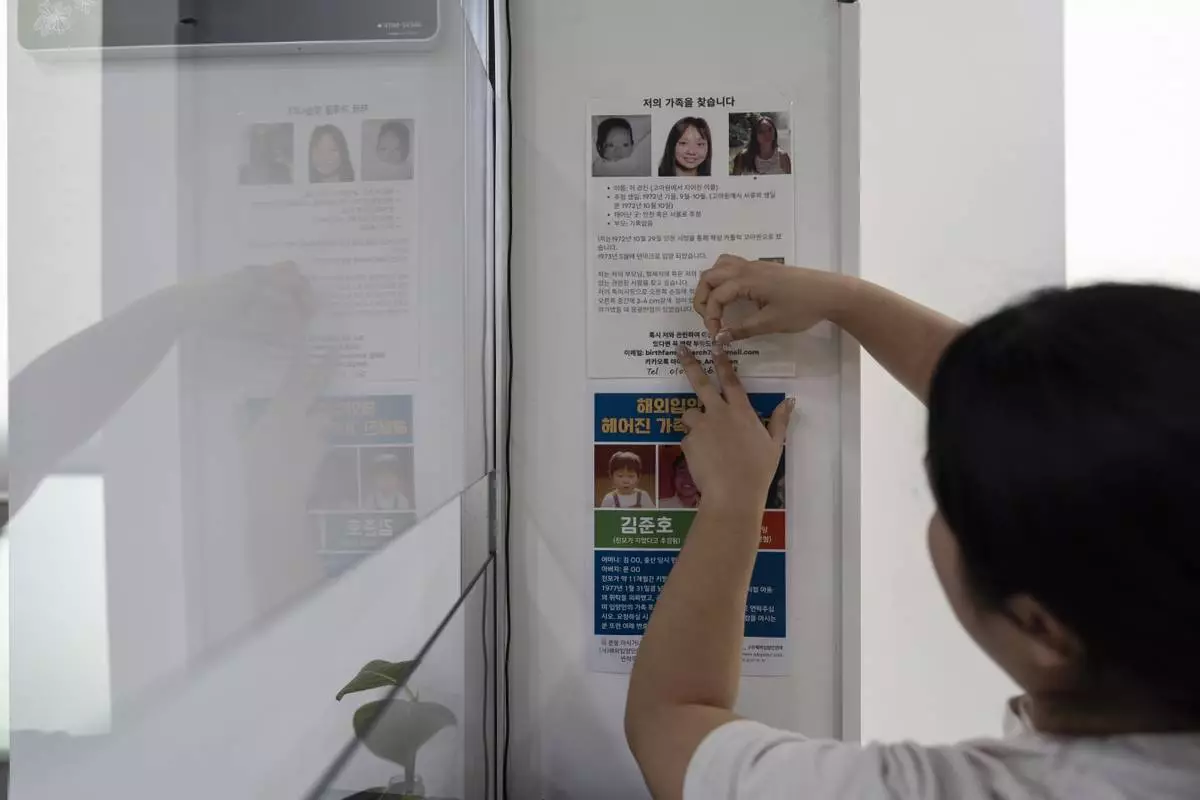
A city employee posts a flyer with photos of adoptee Maja Andersen from various ages in life and details about her birth search on the wall of a police station in Incheon, South Korea, Monday, May 20, 2024, above another left by an adoptee also searching for his roots. Andersen was adopted to a family in Denmark when she was an infant. (AP Photo/Jae C. Hong)
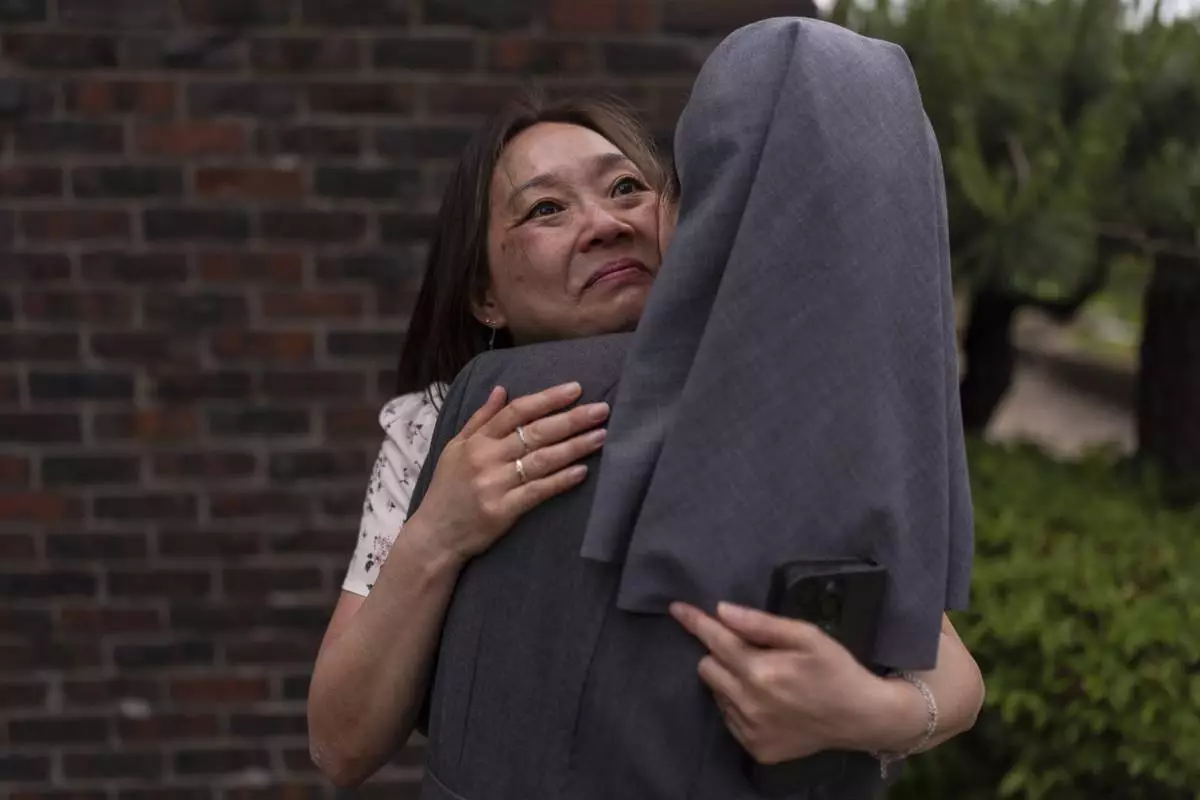
Maja Andersen, an adoptee visiting from Denmark to search for her birth family, hugs Sister Christina Ahn at Star of the Sea orphanage in Incheon, South Korea, Monday, May 20, 2024, while visiting the facility to look for details of her adoption. She had loved being hugged, the orphanage documents said, and had sparkling eyes. “Thank you so much, thank you so much,” Andersen repeated in a trembling voice. There was comfort in that, she had been hugged, she had smiled. (AP Photo/Jae C. Hong)
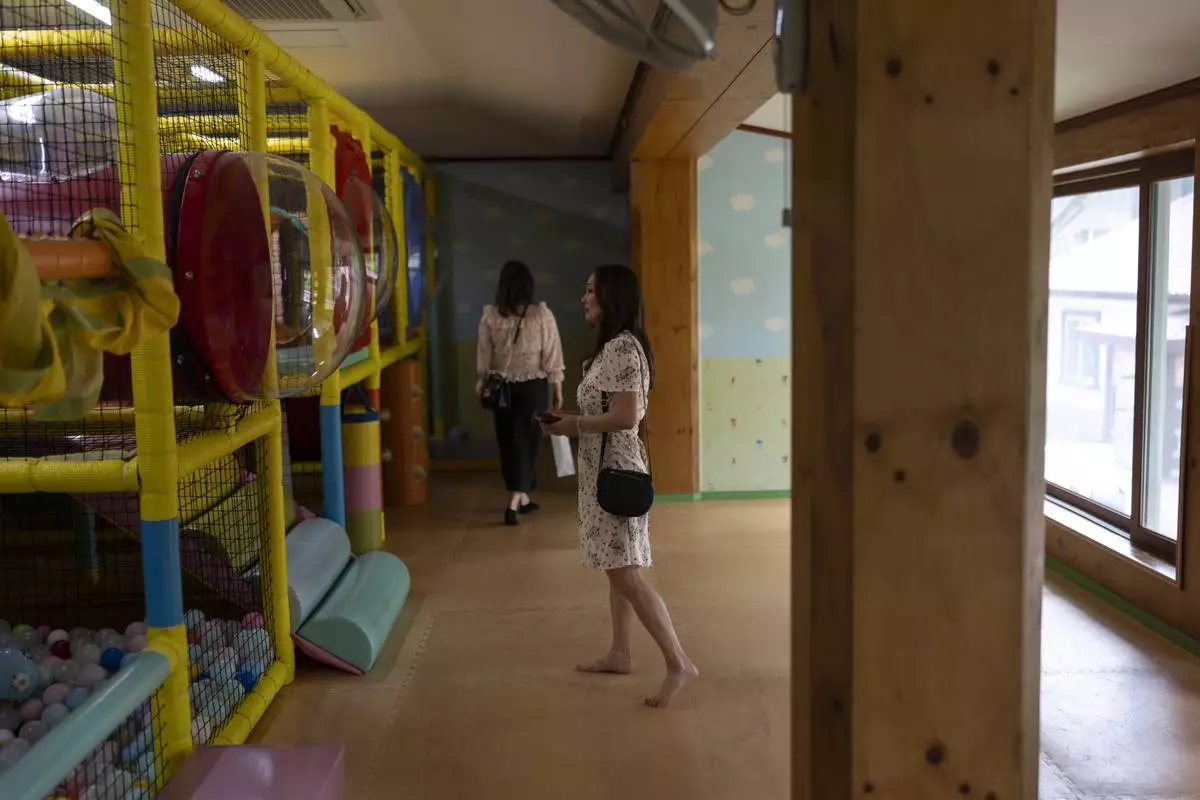
Maja Andersen, an adoptee visiting from Denmark to search for her birth family, visits the Star of the Sea Orphanage in Incheon, South Korea, Monday, May 20, 2024, where she stayed until her adoption at seven months old. She visited the facility to look for documents in hopes of finding her family. (AP Photo/Jae C. Hong)
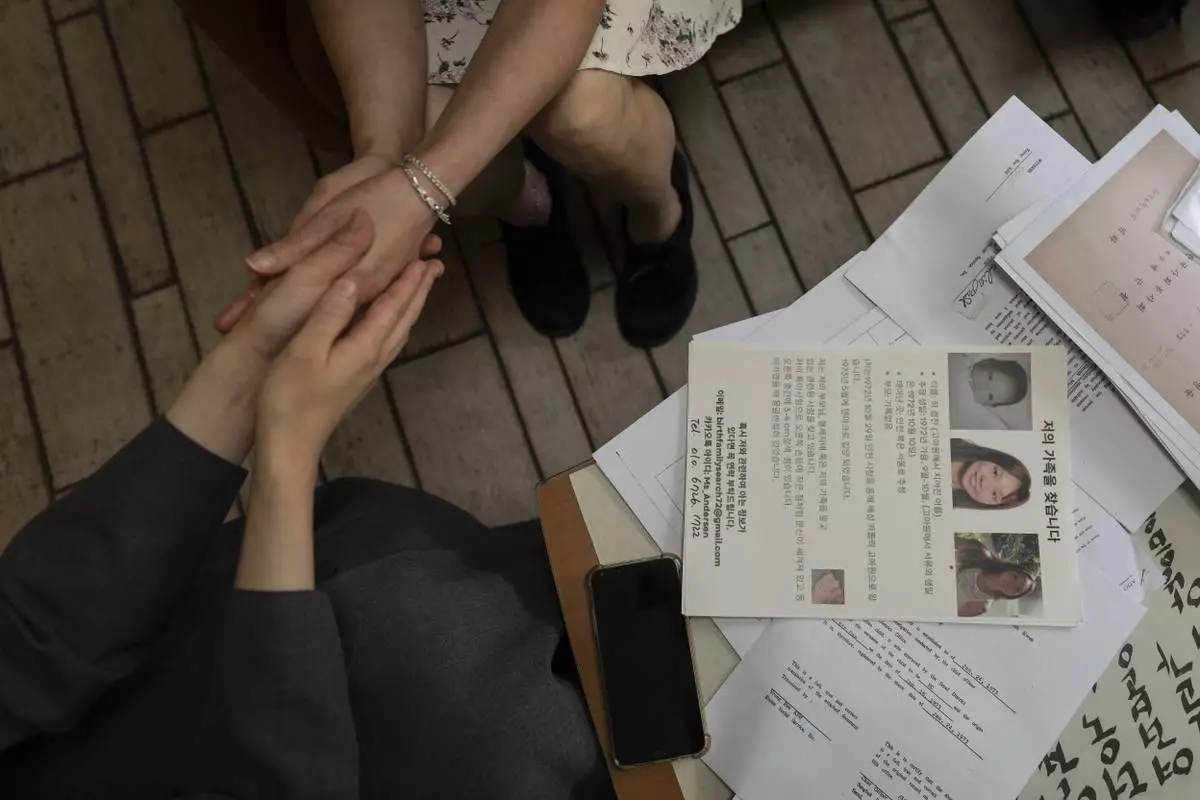
Maja Andersen, top, an adoptee visiting from Denmark to search for her birth family, holds the hands of Sister Christina Ahn at Star of the Sea orphanage in Incheon, South Korea, Monday, May 20, 2024, during her visit to look for documents in hopes of finding her family. She stayed at the facility until her adoption at seven months old. (AP Photo/Jae C. Hong)
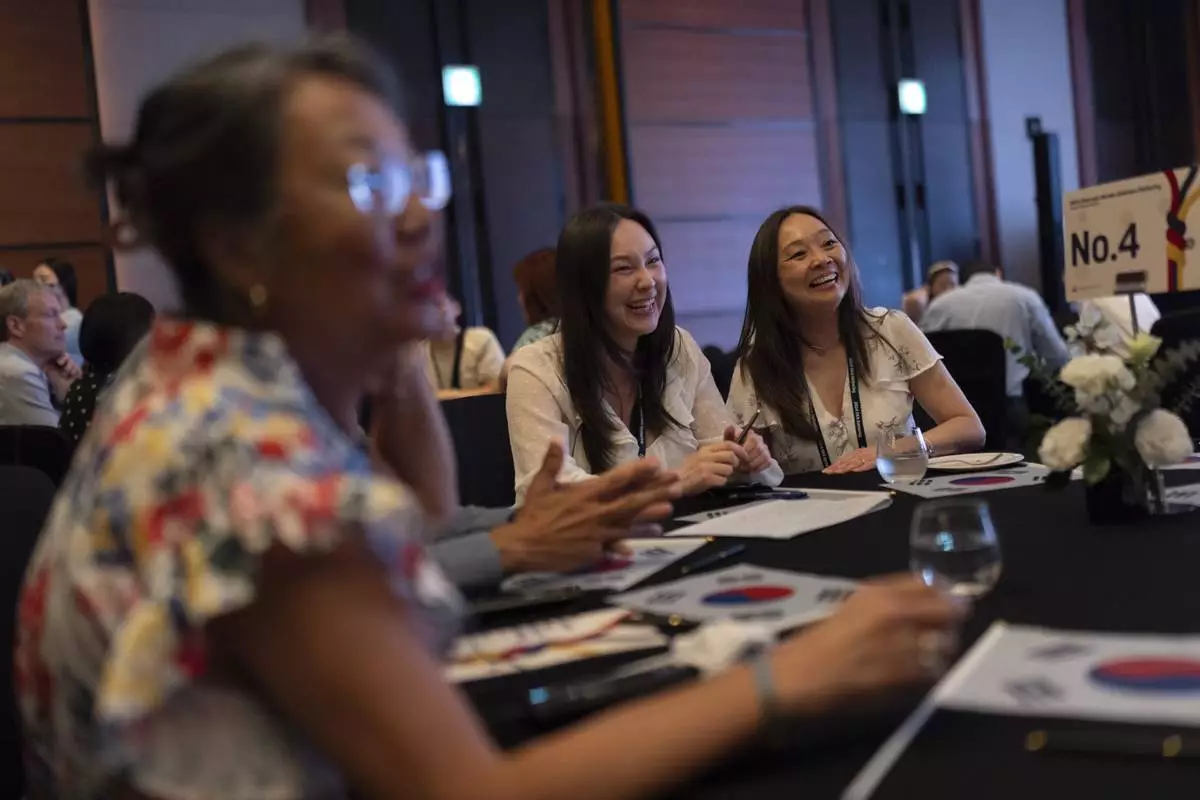
Maja Andersen, right, an adoptee visiting from Denmark to search for her birth family, and her daughter, Yasmin, attend the Overseas Korean Adoptees Gathering in Seoul, South Korea, Tuesday, May 21, 2024. (AP Photo/Jae C. Hong)
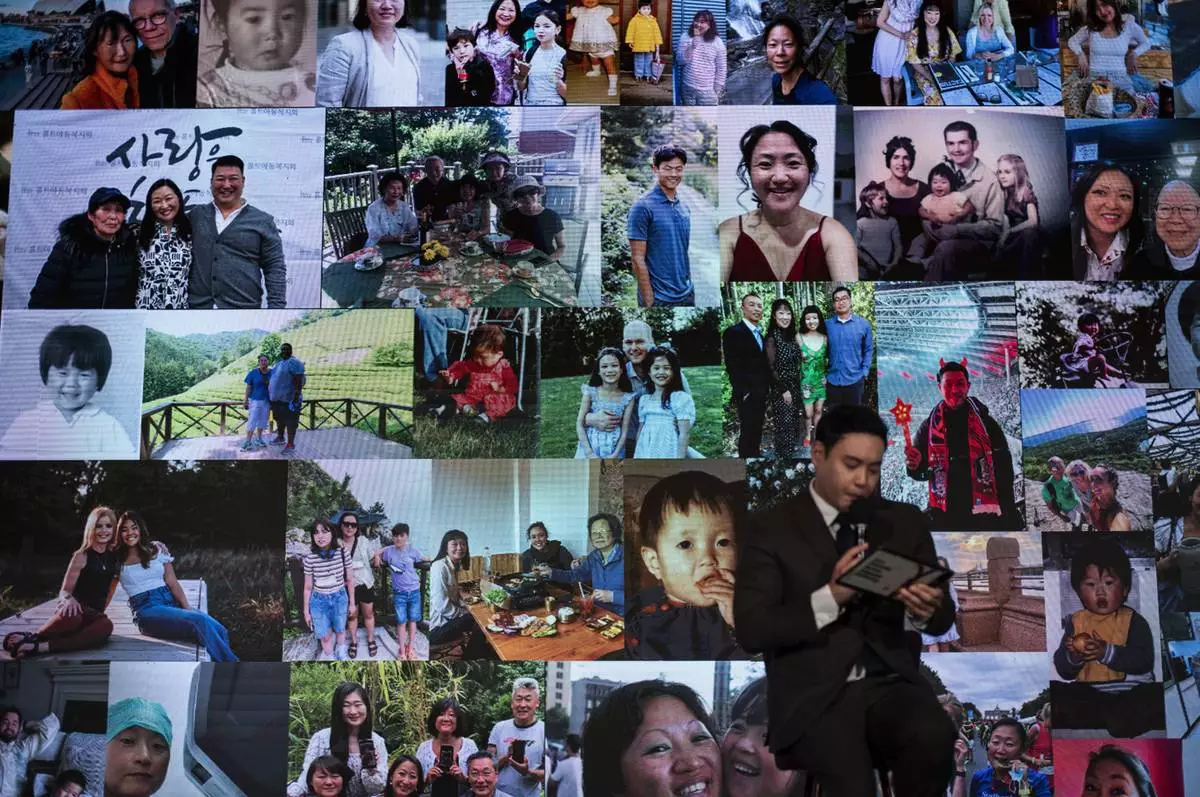
Photos of adoptees participating at the Overseas Korean Adoptees Gathering are displayed on a large screen during the conference in Seoul, South Korea, Tuesday, May 21, 2024. (AP Photo/Jae C. Hong)
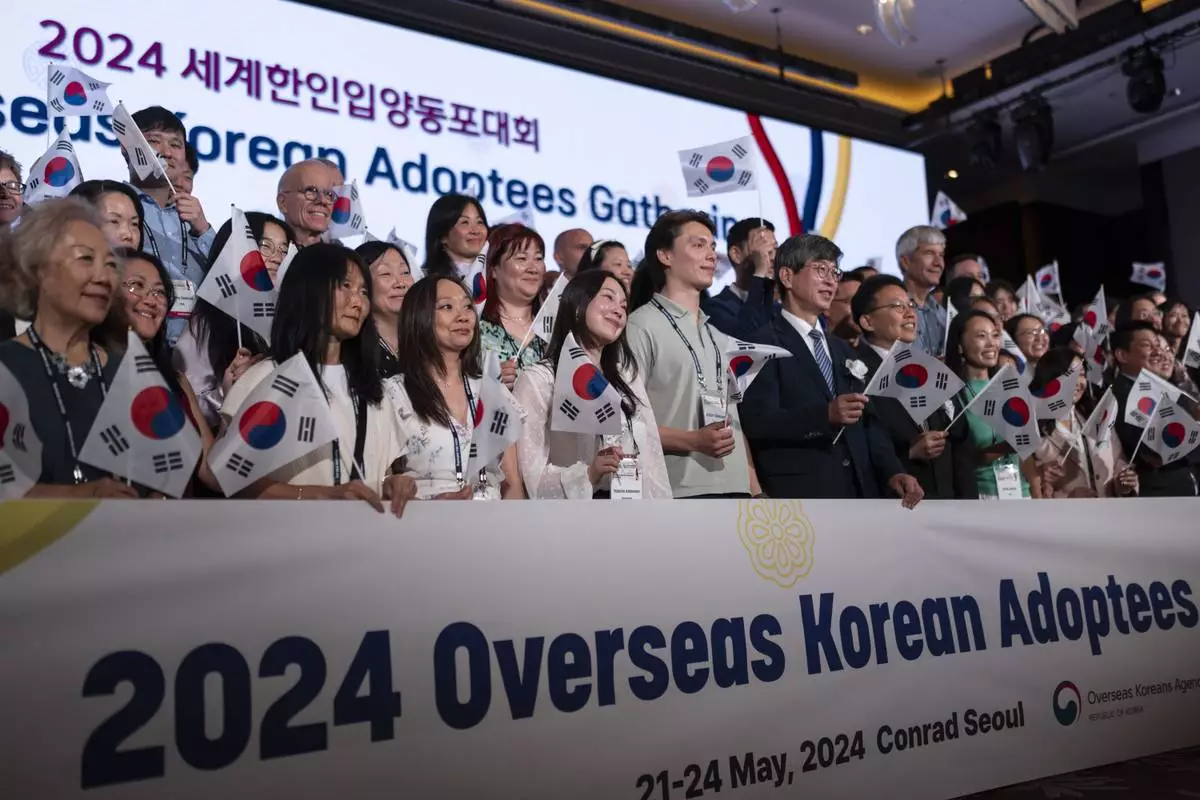
Maja Andersen, front row third from left, an adoptee visiting from Denmark to search for her birth family, holds a South Korean flag with others while taking a group photo at the Overseas Korean Adoptees Gathering in Seoul, South Korea, Tuesday, May 21, 2024. These adoptees are among the 200,000 sent away from Korea to Western nations as children. (AP Photo/Jae C. Hong)
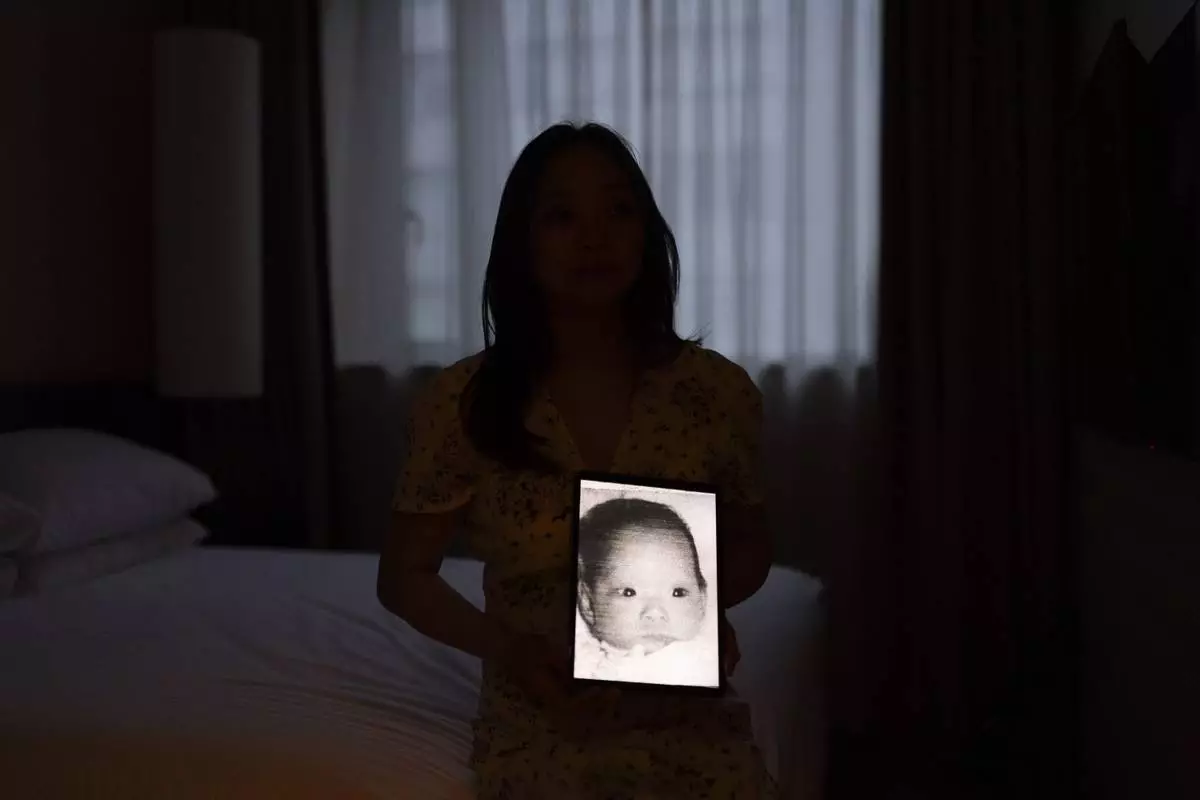
Maja Andersen sits for a photo in her hotel room, holding a tablet displaying her baby photo taken before her adoption to Denmark, as she visits Seoul, South Korea to search for her birth family, Monday, May 20, 2024. Andersen is among thousands of Korean adoptees who have taken a pilgrimage to their motherland for an emotional, often frustrating, sometimes devastating search for their origin story. (AP Photo/Jae C. Hong)
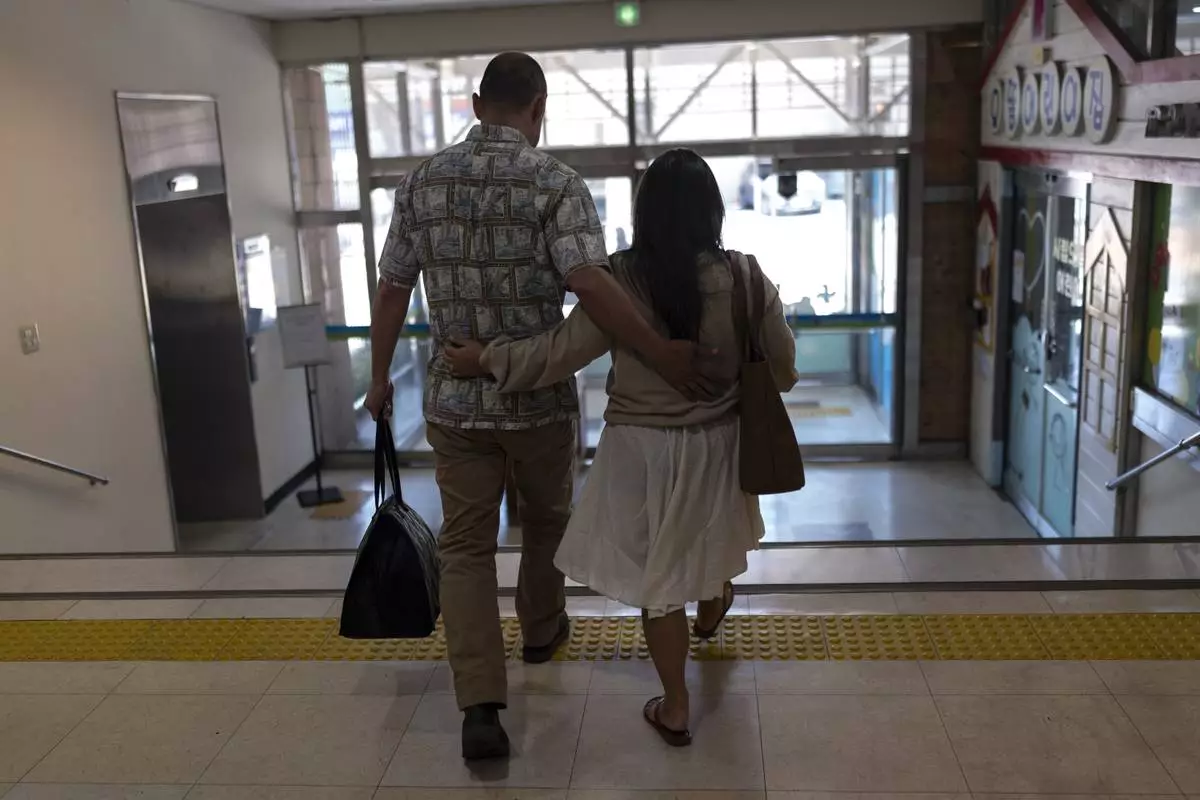
Kenneth Barthel, left, who was abandoned and later adopted to the United States at 6 years old, and his wife, Napela, comfort each other as they leave the Busan Metropolitan City Child Protection Center in Busan, South Korea, Friday, May 17, 2024, after searching for documents that could lead to finding his birth family. (AP Photo/Jae C. Hong)
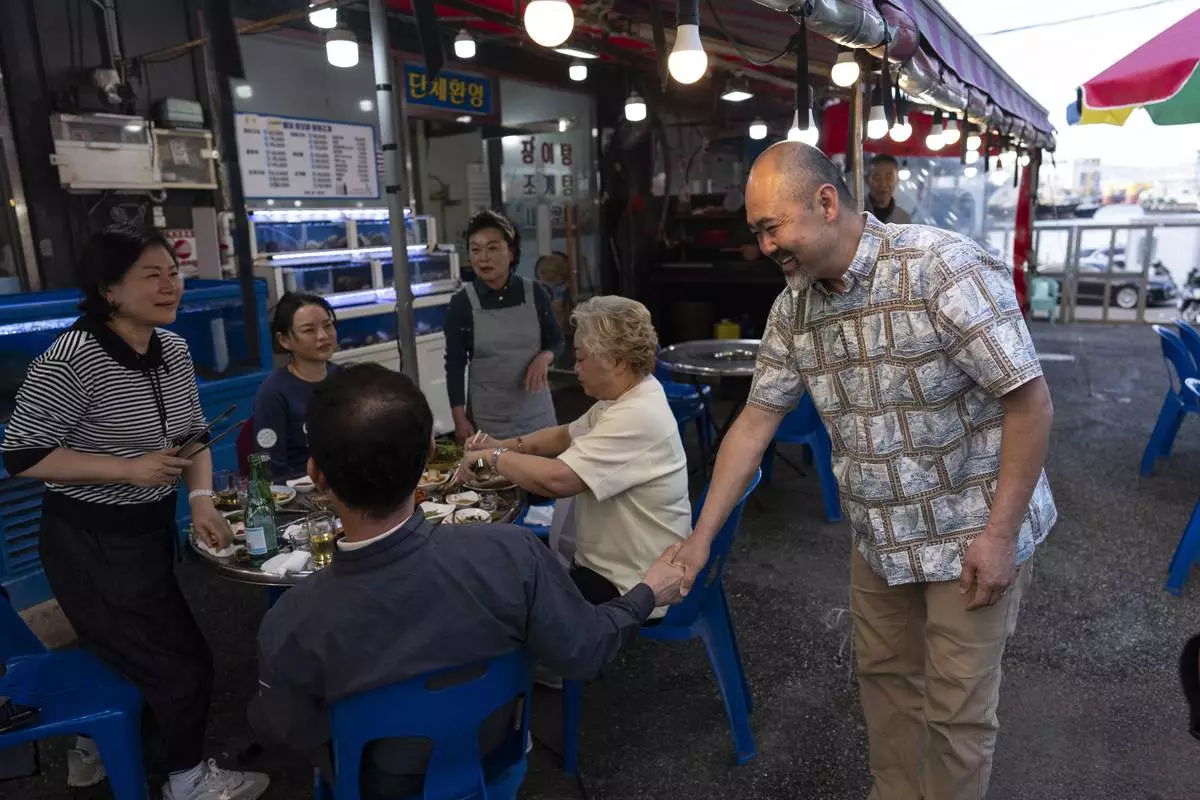
Kenneth Barthel, right, who was adopted to the United States at 6 years old, talks with diners in the neighborhood where he remembers being abandoned by his mother, in Busan, South Korea, Friday, May 17, 2024. Barthel was posting flyers in the area featuring his photos in the hopes of finding his birth family. (AP Photo/Jae C. Hong)
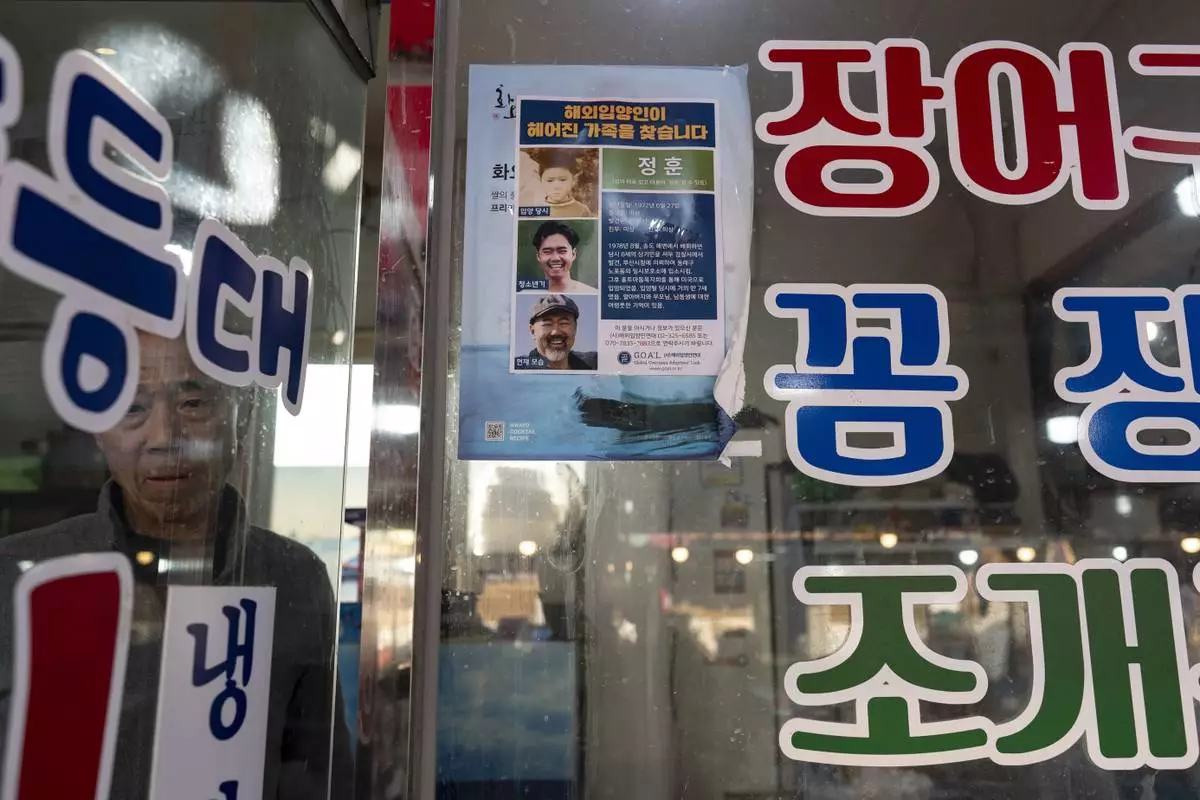
Restaurant owner Shin Byung-chul looks from behind a flyer he put up of Kenneth Barthel, who was abandoned in the area as a child and later adopted to Hawaii at 6 years old, at his restaurant in Busan, South Korea, Friday, May 17, 2024. Barthel has visited Korea four times to search for his birth family. (AP Photo/Jae C. Hong)
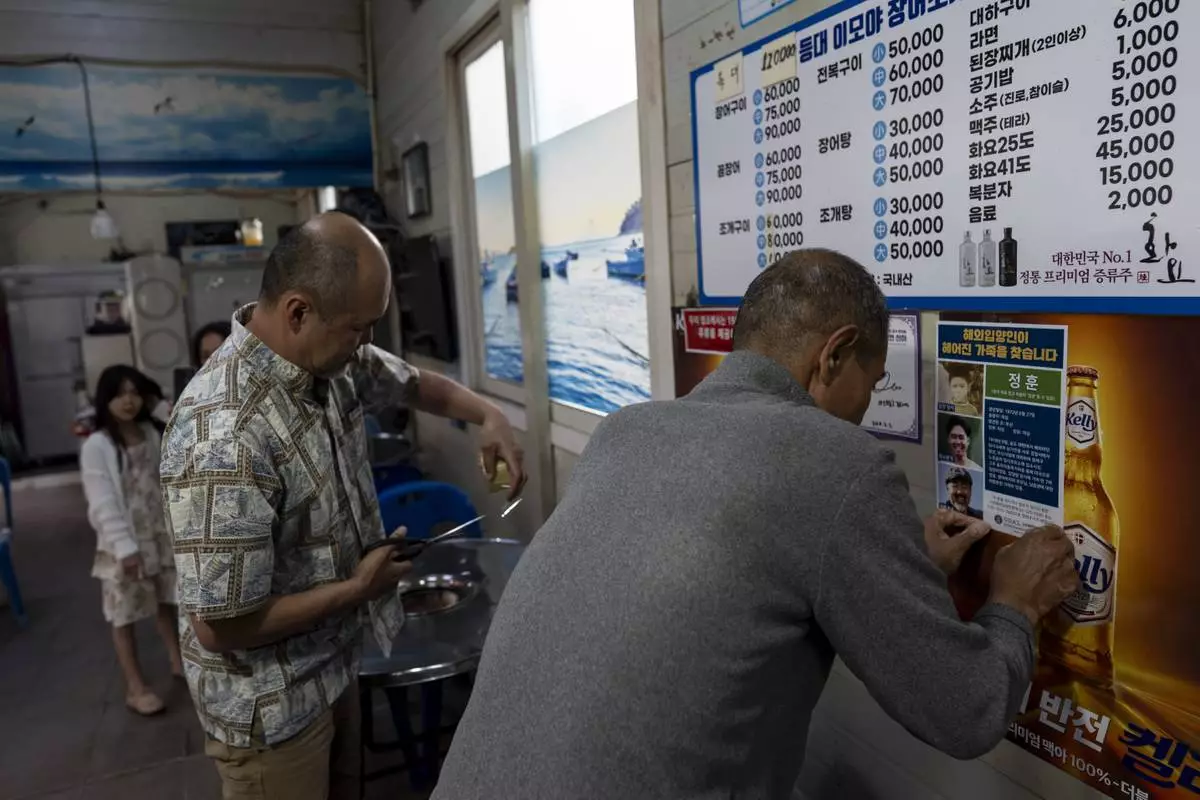
Kenneth Barthel, left, helps Shin Byung-chul post a flyer with photos of Barthel at various ages in his life, on the wall of his restaurant in Busan, South Korea, Friday, May 17, 2024, as Barthel’s daughter, Amiya, rear, looks on. Barthel’s mother had ordered him soup in a restaurant in the area when he was 6 years old, went to the bathroom and never returned. (AP Photo/Jae C. Hong)
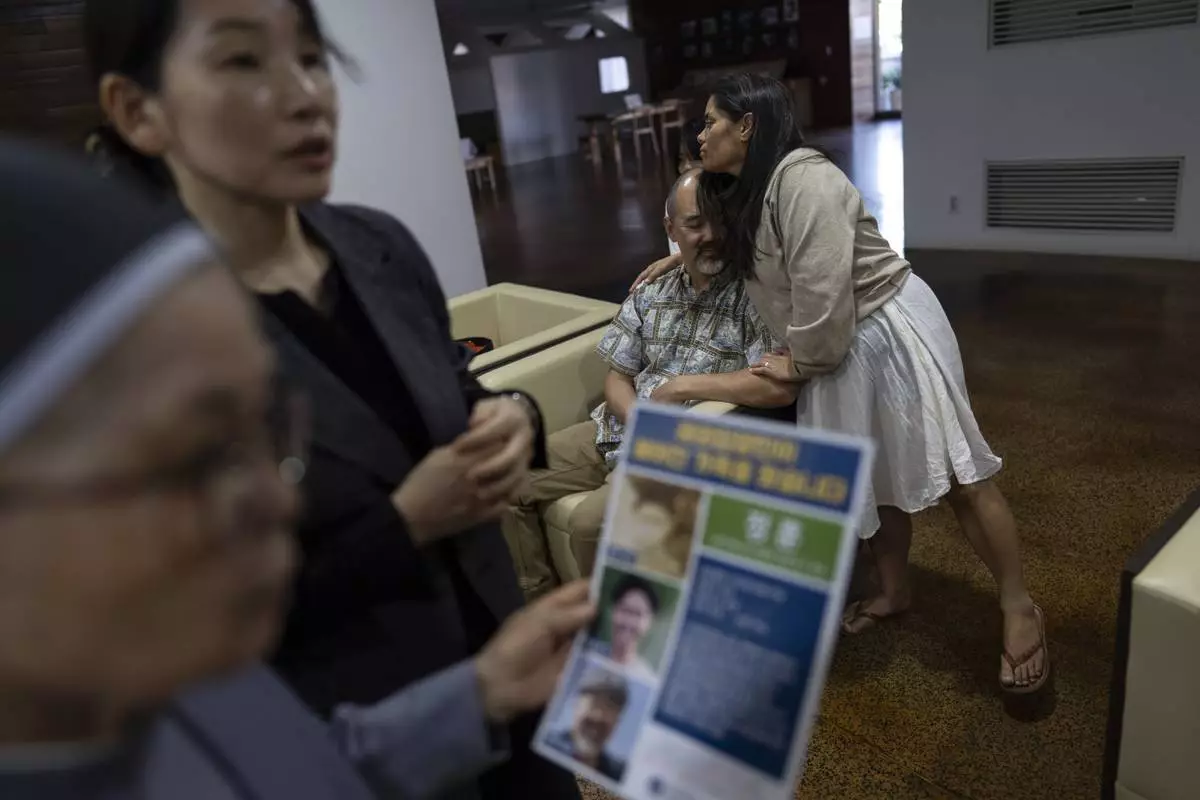
Kenneth Barthel, who was adopted by a single parent in Hawaii at 6 years old, is hugged by his wife, Napela, at the Sisters of Mary in Busan, South Korea, Friday, May 17, 2024. In the foreground, Sister Bulkeia, left, and Paek Kyeong-mi from Global Overseas Adoptees’ Link discuss a flyer designed to uncover the details of Barthel’s early life and find his birth family. (AP Photo/Jae C. Hong)
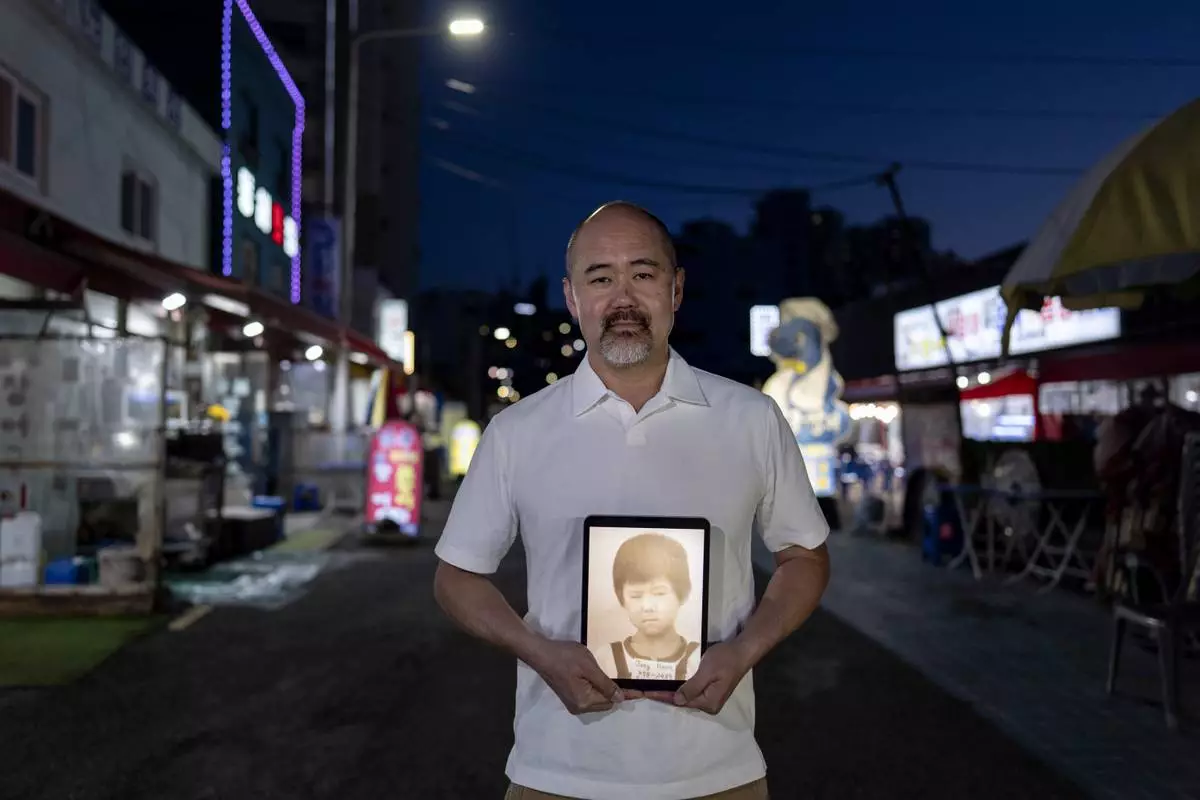
Kenneth Barthel, adopted from South Korea to Hawaii in 1979 at 6 years old, holds a tablet showing his childhood photo in Busan, South Korea, Thursday, May 16, 2024. Barthel is looking for his birth family in Busan where he believes he was abandoned when his mother ordered soup for him in a restaurant and never returned. (AP Photo/Jae C. Hong)
TEL AVIV, Israel (AP) — At a busy Tel Aviv entertainment district, diners spill into outdoor seating and clink glasses as music fills the air. There’s laughter, there’s life. But all around the patrons, staring down from lampposts and shop windows, are pictures of hostages held in Gaza, stark reminders that Israel is at war and forever scarred by the deadliest attack in its history.
As Israel’s war with Hamas reaches its one-year mark, it can seem on the surface that much of life in the country has returned to normal. But with many still reeling from Hamas’ Oct. 7 attack, hostages remaining in captivity and a new front of warwith Hezbollah in the north, many Israelis feel depressed, despondent and angry as the war stretches into its second year.
Uncertainty over the future has cast a pall over virtually every part of daily life, even as people try to maintain a sense of normalcy.
“The conversation about the situation is always there,” said activist Zeev Engelmayer, whose daily postcard project featuring illustrations of hostages or Israel’s new reality has become a fixture at anti-war protests. “Even those who are sitting in coffee shops, they’re talking about it, in every single situation I see it. It’s impossible to get away from it. It has entered into every vibration of our life.”
Hamas’ attack in which some 1,200 people were killed and 250 kidnapped shattered Israelis’ sense of security and stability in their homeland.
Many have been rattled by the war’s evolution. Nearly 100 hostages remain in Gaza, with less than 70 believed to be alive. Israelis have experienced attacks — missiles from Iran and Hezbollah, explosive drones from Yemen, fatal shootings and stabbings — as the region braces for further escalation.
They’ve watched as Israel is accused of committing war crimes and genocide in Gaza and becomes increasingly isolated internationally.
“I’m almost 80 — we grew up in this country with a feeling that we have short wars, and we win them quickly,” said Israeli historian Tom Segev, who described new feelings of utter hopelessness. “We’re not used to a long war.”
Israelis have long harbored a sense that their country, born of the Holocaust’s ashes and surviving a panoply of regional threats, is a success story, Segev said. They’ve strived, he added, for a normality akin to that of European and North American people, though their reality for decades has been anything but.
“I think that history is going backward,” he said of the past year. “Everything we have achieved on our way to becoming a normal state isn’t happening.”
Reminders are everywhere. At a Hebrew University graduation in Jerusalem, a large yellow ribbon was placed in front of the stage. A graduate who didn’t attend because his brother was killed in Gaza the previous day was honored.
Israel’s longstanding internal divisions briefly eased in the aftermath of Hamas’ attack, but have only intensified since. Weekly protests calling for a cease-fire deal that would free hostages are attended mostly by secular Jewish Israelis who oppose Prime Minister Benjamin Netanyahu and his government.
According to a September poll by Jerusalem-based think tank Israel Democracy Institute, 61 percent of right-wing Jewish Israelis — Netanyahu’s base — support the war continuing.
Occupied with their own trauma, most Israelis paid scant attention to the ongoing destruction in Gaza, even as the Health Ministry there put the Palestinian death toll at more than 41,000. Israeli media have reported little on the devastation. Israelis calling for a cease-fire are driven overwhelmingly by the hostages’ plight.
Many Israelis are furious at leaders and the military for not preventing Hamas’ attack. Tens of thousands of people are expected at an alternative ceremony marking one year since then, as a statement against the government’s official commemoration. The state ceremony is being prerecorded without a live audience, in part because of fears of heckling and disruptions.
“The thing we lost on Oct. 7 — and we haven’t gotten it back — is our feeling of security,” Muli Segev, executive producer of “Eretz Nehederet,” a popular sketch comedy show. “Despite everything, we have been able to create a life here that’s pretty open and Western.
“Especially in Tel Aviv, we go about our lives, and we don’t think about the fact that our lives are really just pauses between wars and between explosions of violence.”
In the war’s early months, the show’s sketches were gentler, focusing on what united Israeli society, such as the massive civilian volunteer response. Over time, they featured more pointed satire, including a reimagining of negotiations if the hostages were Israeli politicians’ children — released in less than two hours.
Parts of life have rebounded — beaches full of people, bustling cafes, concerts and sports back on schedules. But residents also check for the nearest bomb shelter, deal with school cancellations when violence flares up, and avoid domestic travel hubs that are now off-limits. Heartbreaking news arrives regularly, including the deaths of six hostages in August.
“It’s a nightmare; we’re just getting used to it,” said Maya Brandwine, a 33-year-old graphic designer who witnessed the Jaffa shooting that killed seven on Tuesday. “I have so little hope. I’m sure the situation will only get worse.”
Dror Rotches, a 47-year-old graphic designer, said from a Tel Aviv coffee shop: “We try to go out when we can, meet friends and try to forget for a few hours. Then we go home and keep slogging through the mud.”
Others simply can’t return home. More than 60,000 from Israel’s northern border with Lebanon are displaced. Thousands from the southern towns ransacked Oct. 7 are in temporary housing. Tens of thousands of reserve soldiers are serving their second or third tour of duty, straining their families and jobs.
“As the war goes on and on and we can’t see the end, there’s also a type of very large worry over the future, and, for some, if there is even a future here,” Muli Segev said.
Cafe Otef seems like any of Tel Aviv’s ubiquitous coffee shops: Patrons laugh and sip specialty coffee beside a playground; light rock music plays. But next to the sandwiches and cakes are chocolates made from the recipes of Dvir Karp, who was killed in the Oct. 7 attack, and cheeses from Kibbutz Be’eri, where more than 100 died and 30 were taken hostage. Totes and T-shirts for sale declare “We shall thrive again.”
The cafe, named for the region next to the Gaza border, is run by residents of Re’im, one of the kibbutzes struck. It’s the second shop in the new chain, each aiming to support people of a southern Israeli town where lives were upended.
“The war still continues for almost a year, and I feel that if we won’t live, we will die,” said Reut Karp, cafe owner and Dvir’s ex-wife. She lives with most of her kibbutz in temporary housing nearby.
The cafe gives her purpose as her community deals with trauma and the uncertainty of returning home. While it’s strange to see people flowing through the doors, going about life as normal, she and the staff have found comfort in the routine.
“We must take ourselves out of bed and continue to live and to work and to have the hope,” Karp said. “Because without this hope, we don’t have anything.”
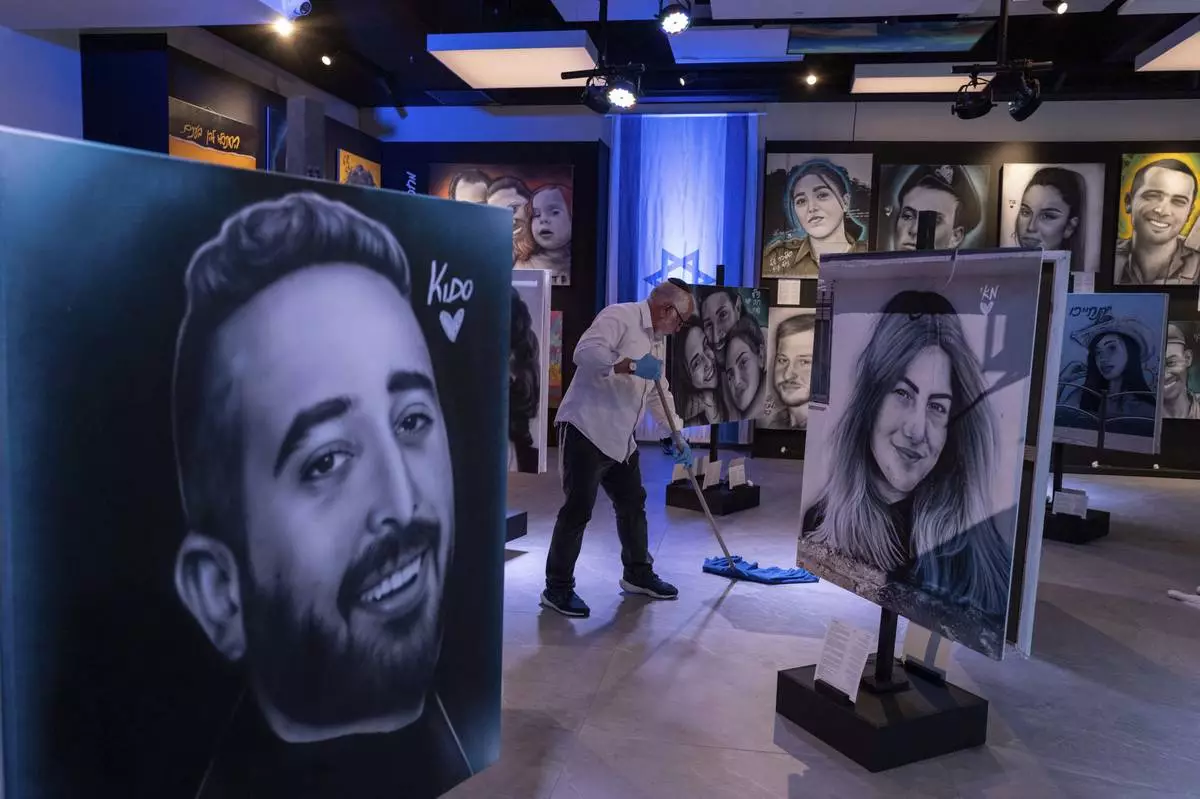
A worker cleans the floor at an exhibition by Israeli graffiti artist Benzi Brofman that displays portraits of the victims of the Oct. 7 Hamas attack on Israel, in Jerusalem, Sunday, Sept.29, 2024. (AP Photo/Ohad Zwigenberg)
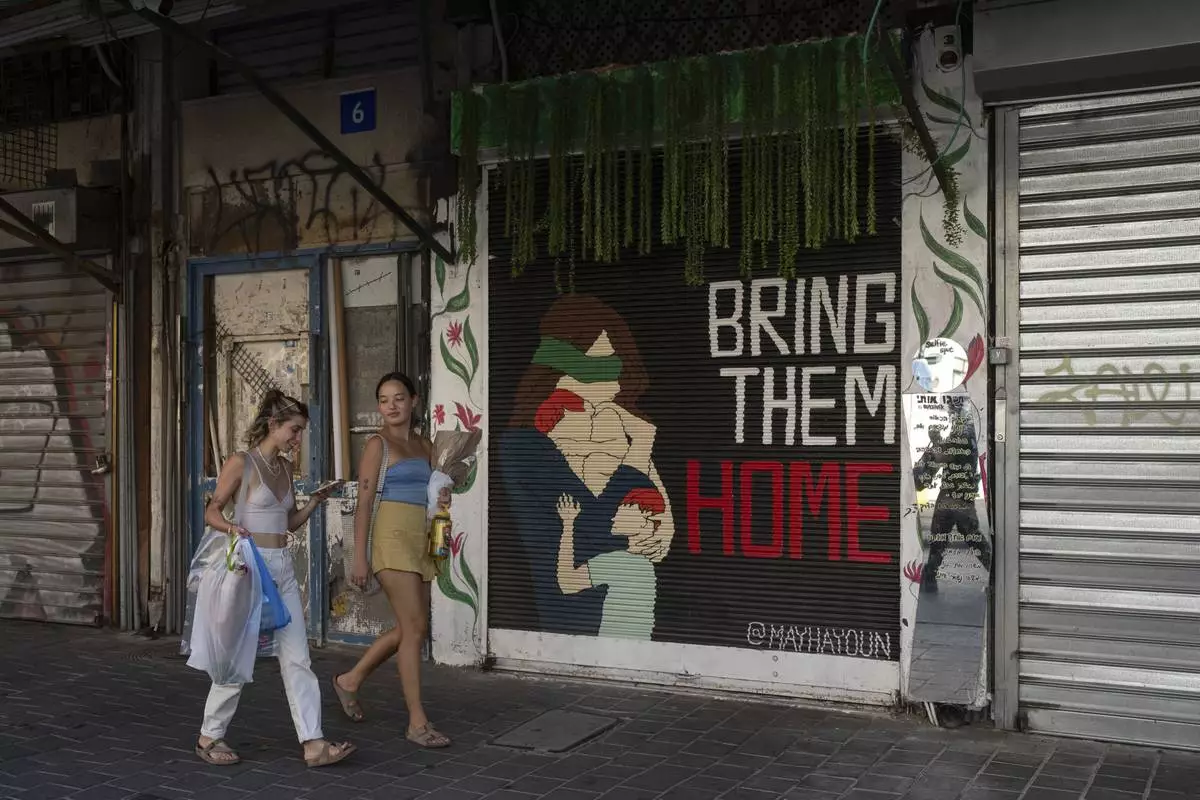
Women walk past graffiti calling for the release of hostages held by Hamas militants in the Gaza Strip for nearly a year, in the Carmel market Tel Aviv, Israel, Friday, Sept. 27, 2024. (AP Photo/Ohad Zwigenberg)
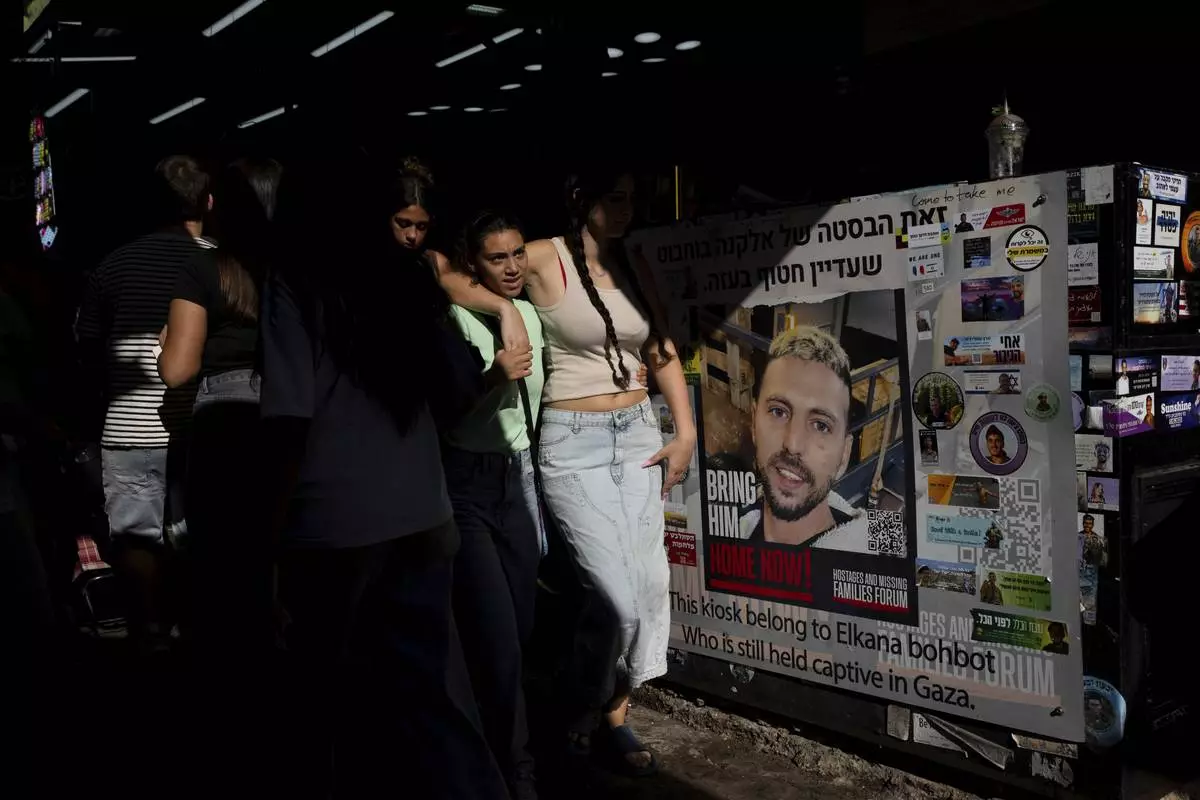
People walk next to the market stand belonging to Elkana Bohbot, who was kidnapped from the Nova festival and has not been released from Gaza in the Carmel Market in Tel Aviv, Israel, Sept. 27, 2024.(AP Photo/Ohad Zwigenberg)

People listen to Israeli singer Yoni Bloch, who has written new songs about the current war, in concert at a record store in Tel Aviv, Israel, Friday, Sept. 27, 2024. (AP Photo/Ohad Zwigenberg)
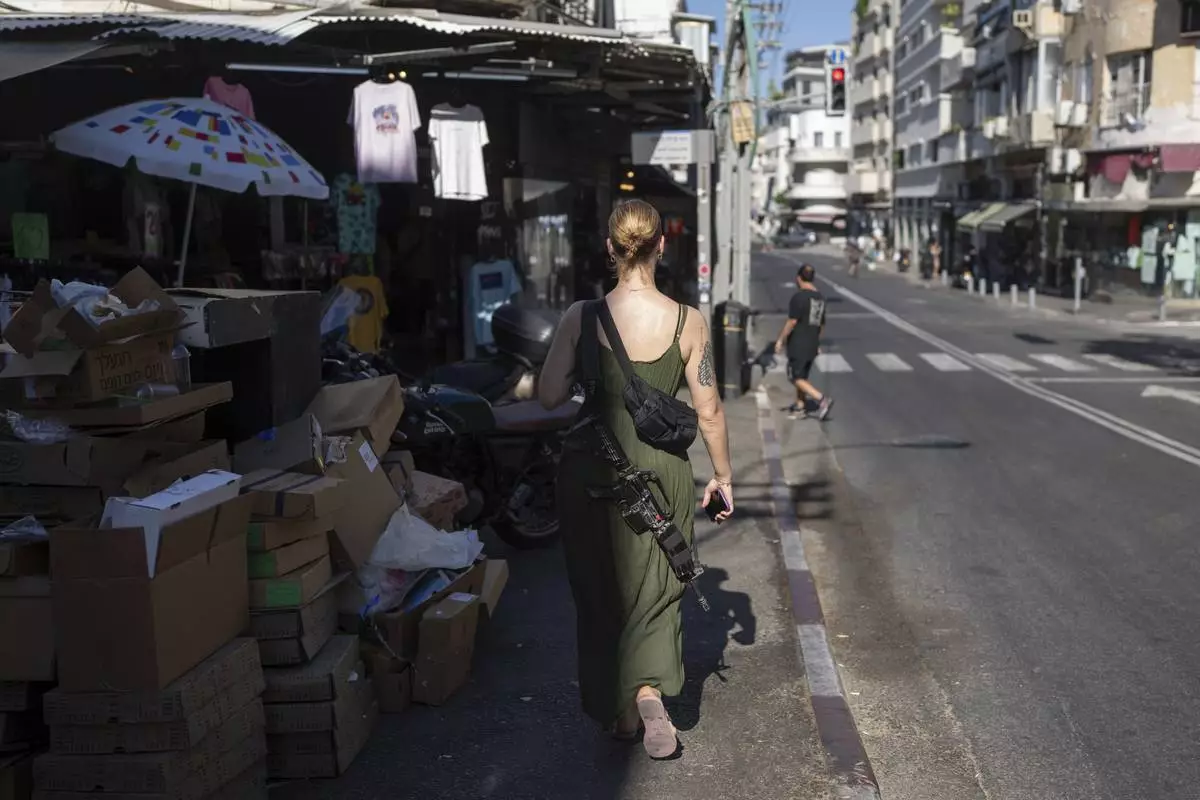
An off-duty Israeli soldier carrying her M-16 rifle walks down the street in Tel Aviv Israel, Friday, Sept. 27, 2024. (AP Photo/Ohad Zwigenberg)
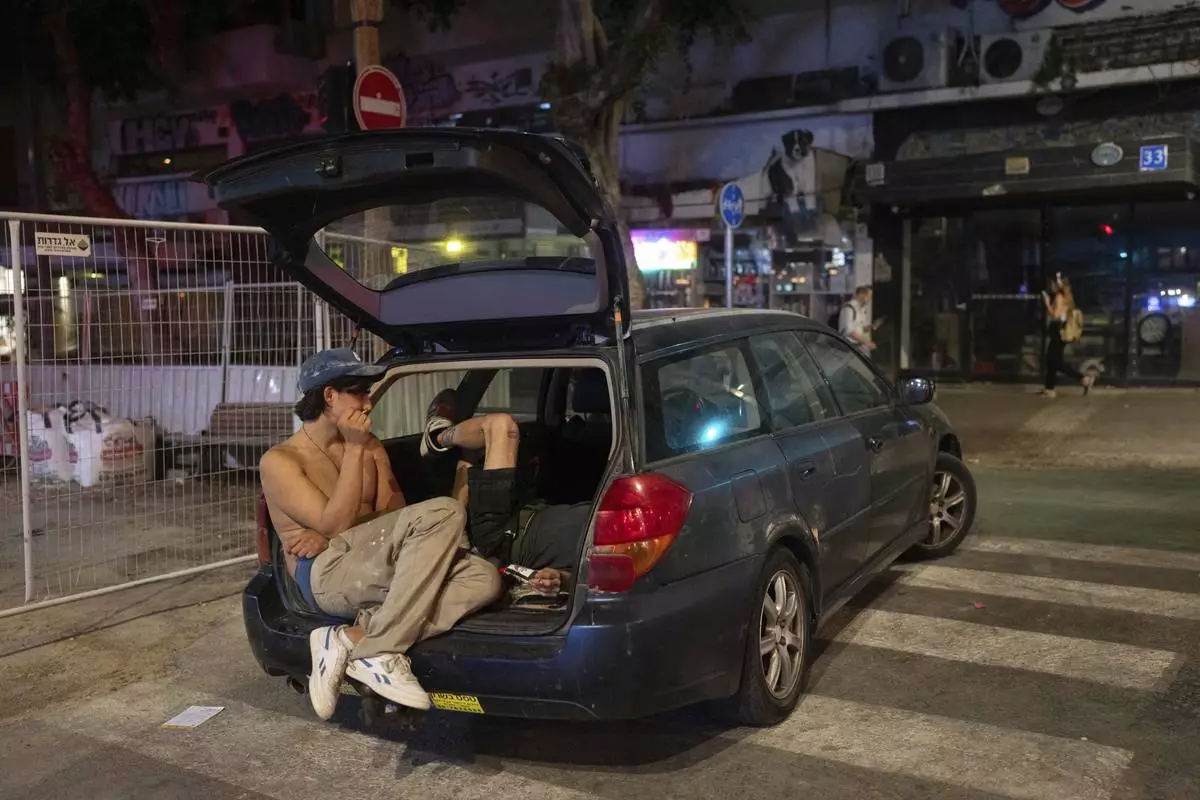
Young people chat in the rear of a car in Tel Aviv, Israel, Wednesday, Sept. 25, 2024. (AP Photo/Ohad Zwigenberg)
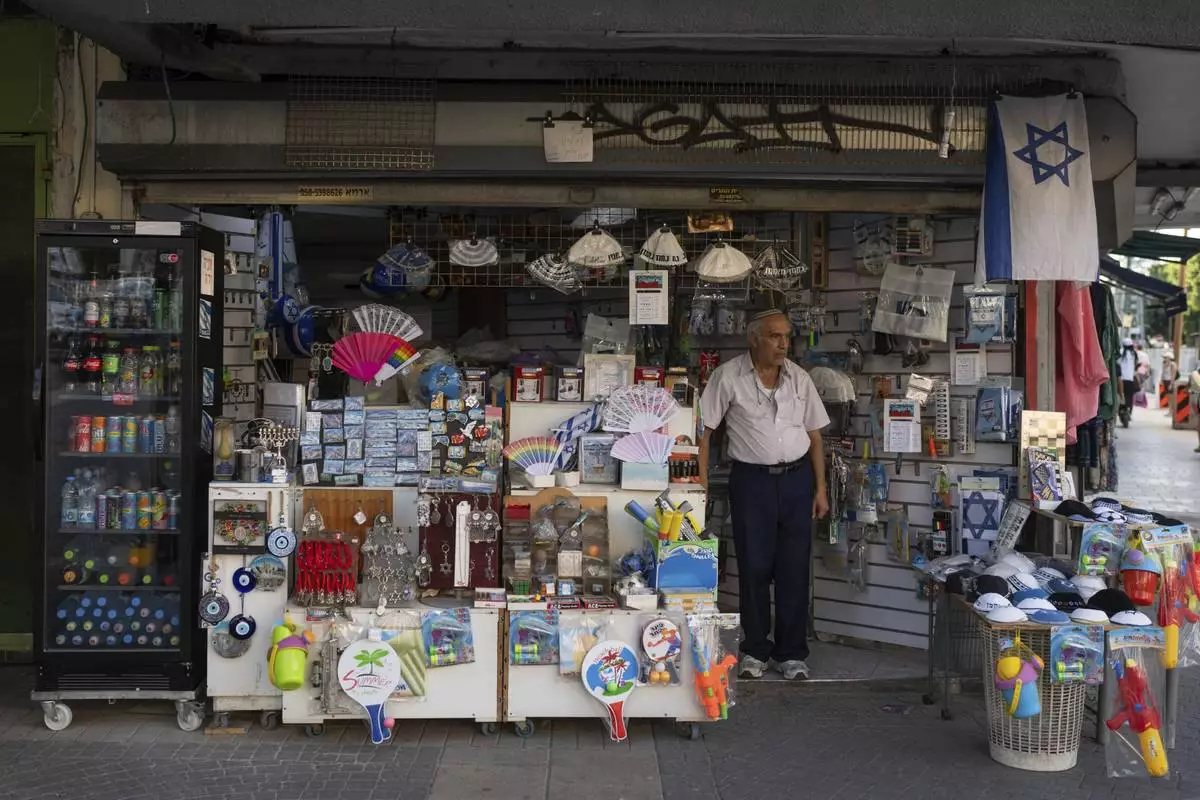
A man stands at the entrance to his empty souvenir shop in the Carmel market in Tel Aviv, Israel, on Wednesday, Sept. 25, 2024. (AP Photo/Ohad Zwigenberg)
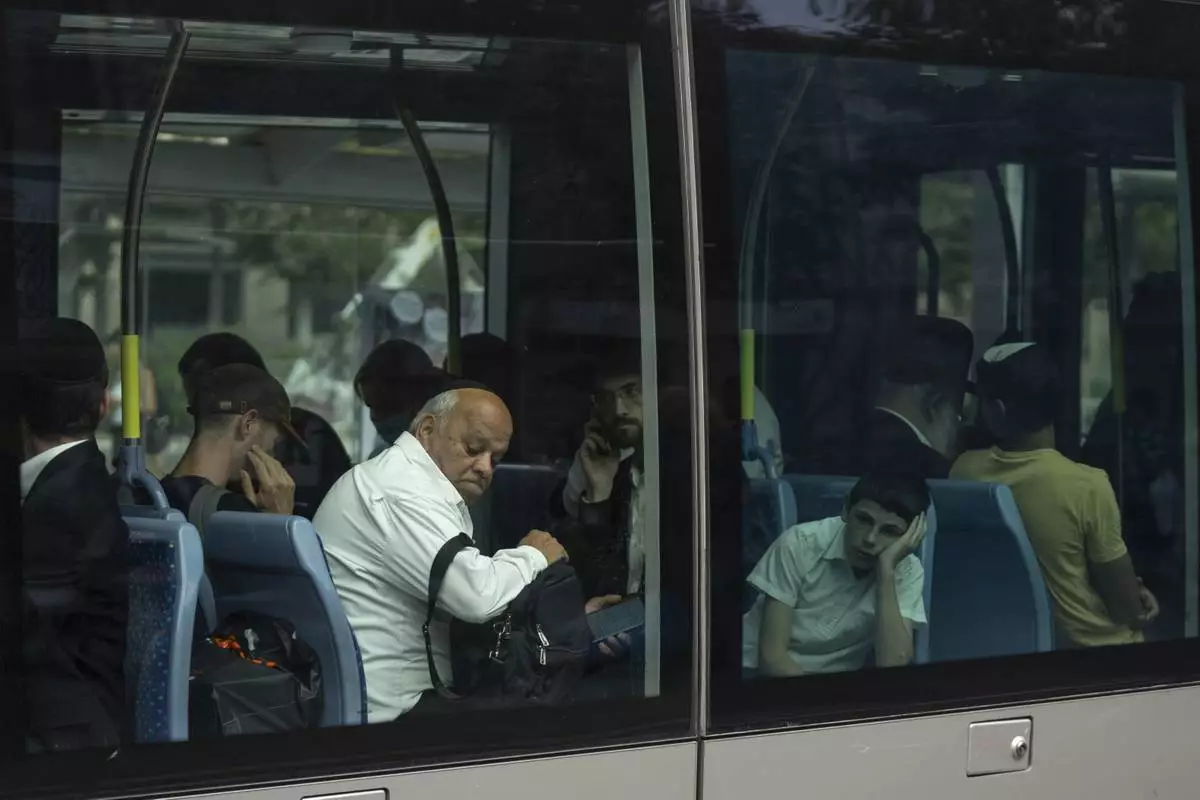
People travel by light rail in Jerusalem on Wednesday, Sept.18, 2024. (AP Photo/Ohad Zwigenberg)
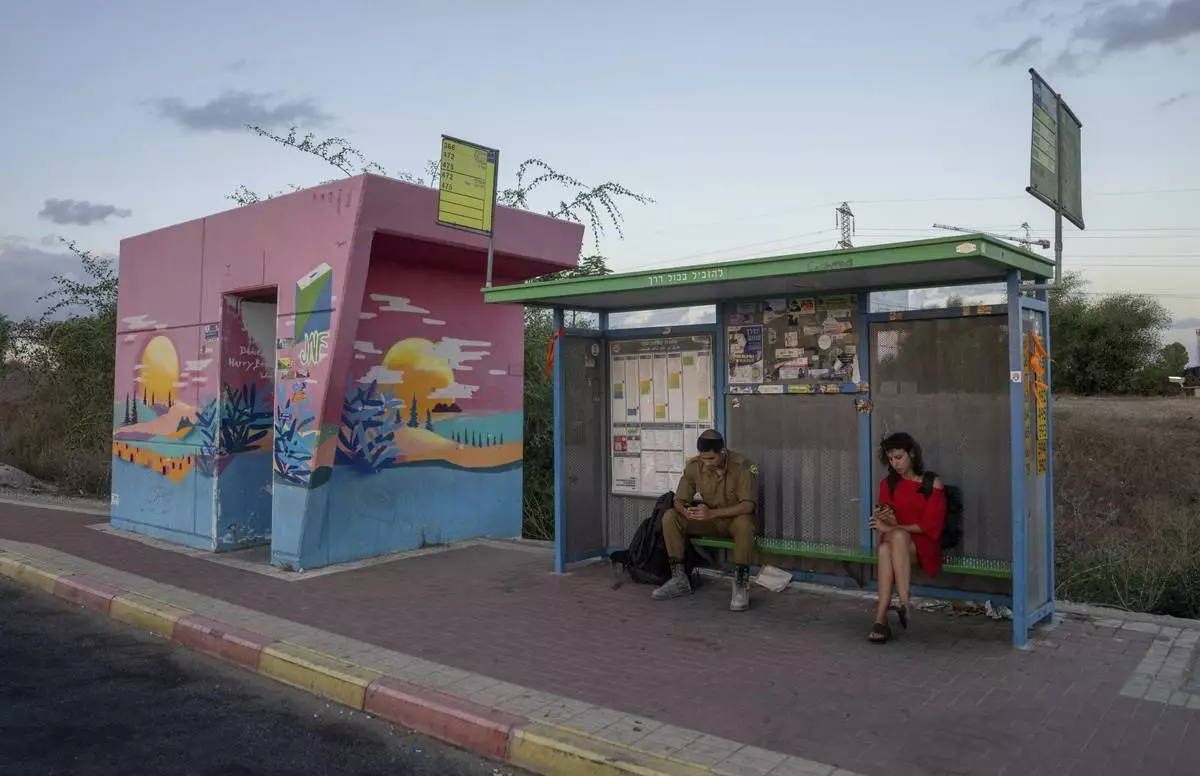
A soldier and a woman wait at a bus stop next to a bomb shelter in the town of Sderot, southern Israel, Monday, Sept. 16, 2024. (AP Photo/Ohad Zwigenberg)
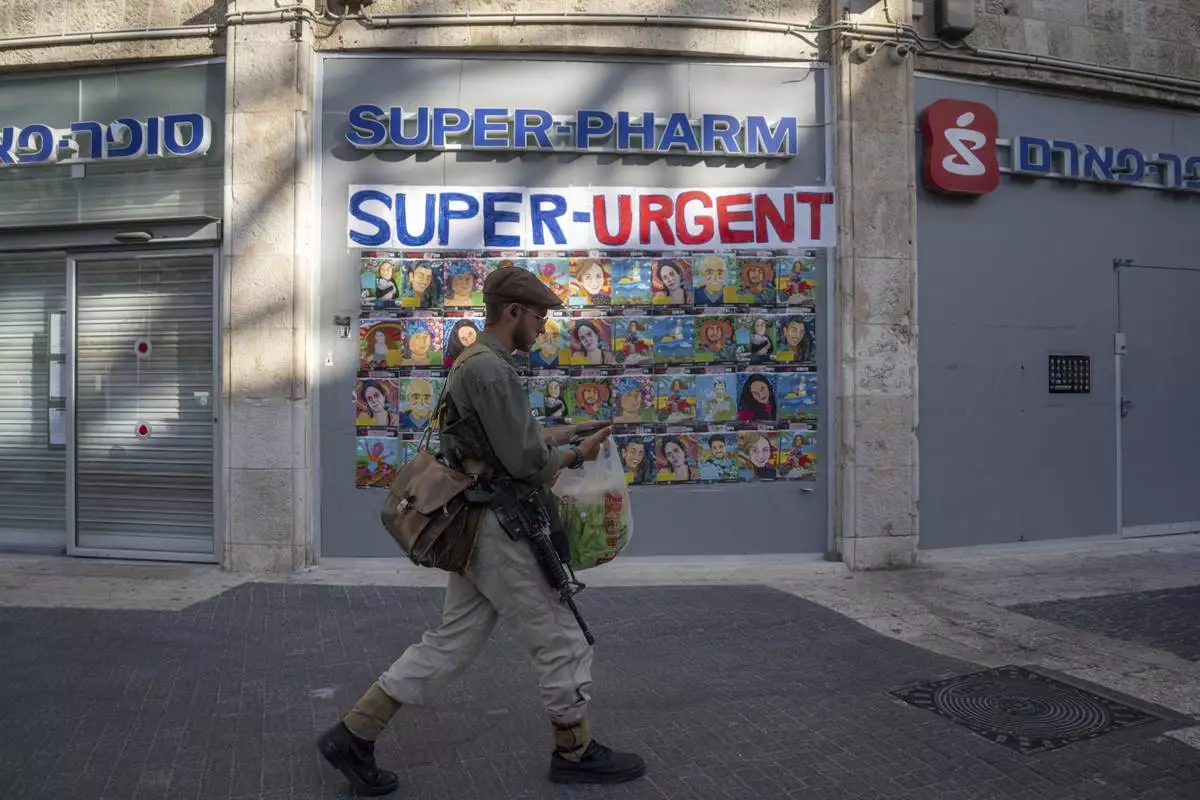
An off-duty Israeli soldier carrying his M-16 rifle walks past posters calling for the release of hostages held in the Gaza Strip, in Jerusalem, Friday, Sept.13, 2024. (AP Photo/Ohad Zwigenberg)
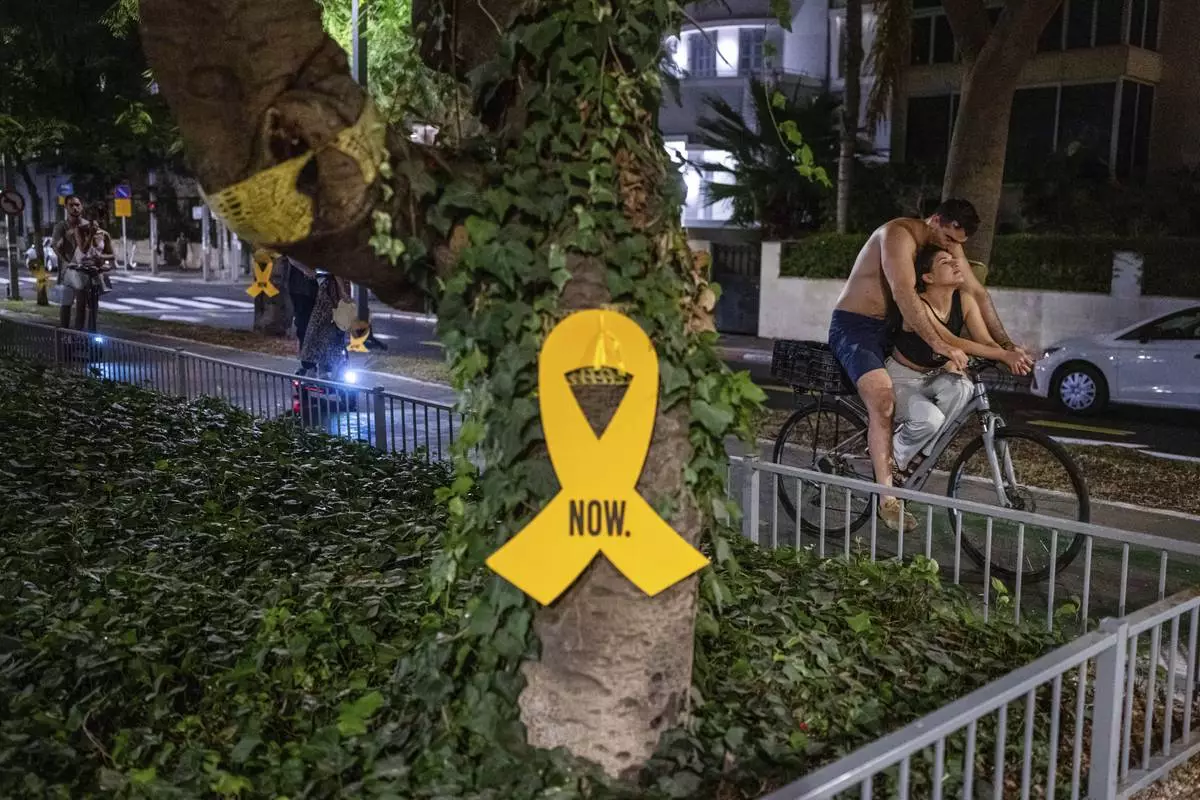
A couple rides a bicycle near a yellow ribbon sign calling for the release of hostages held in the Gaza Strip by the Hamas militant group for nearly a year, in Tel Aviv, Israel, Monday, Sept. 10, 2024. (AP Photo/Ohad Zwigenberg)

Signs calling for the return of hostages held captive by Hamas in Gaza are displayed during a match of the Hapoel Jerusalem soccer team in Jerusalem on Saturday, Sept. 21, 2024. (AP Photo/Ohad Zwigenberg)
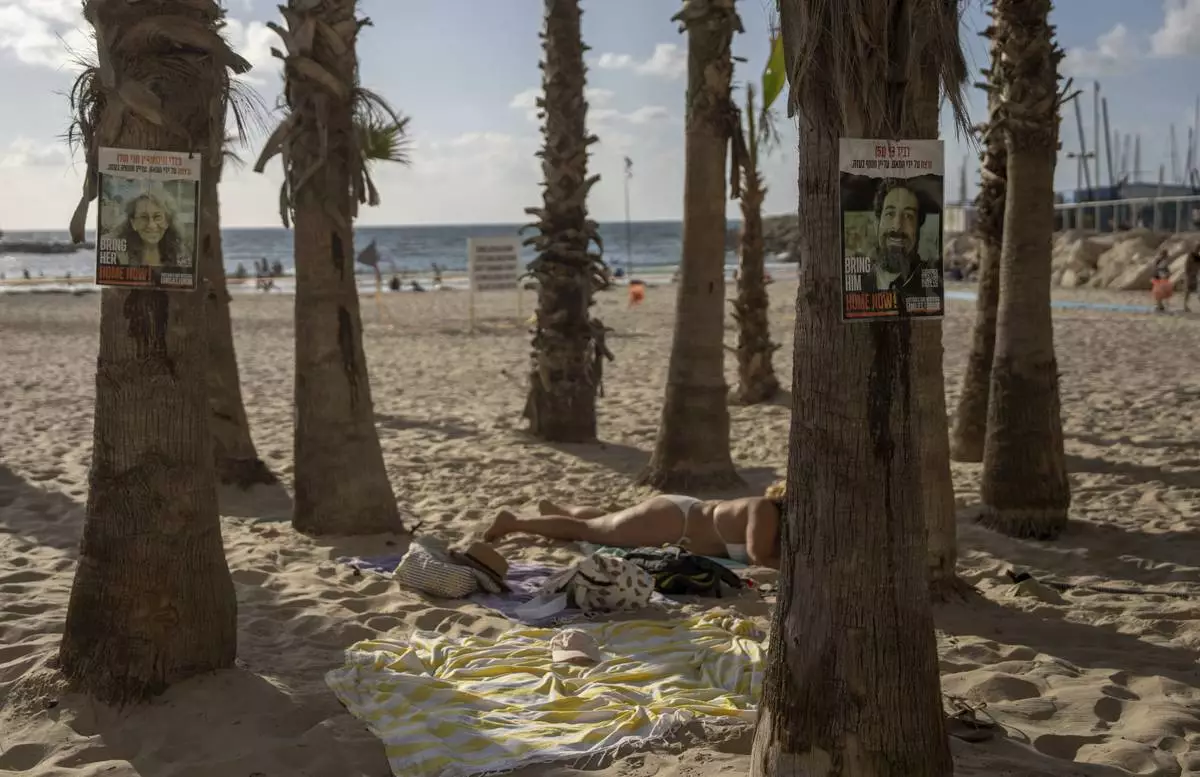
Signs calling for the release of hostages held in the Gaza Strip are plastered on trees in Tel Aviv’s beach, Israel, Saturday, Sept. 14, 2024. (AP Photo/Ohad Zwigenberg)
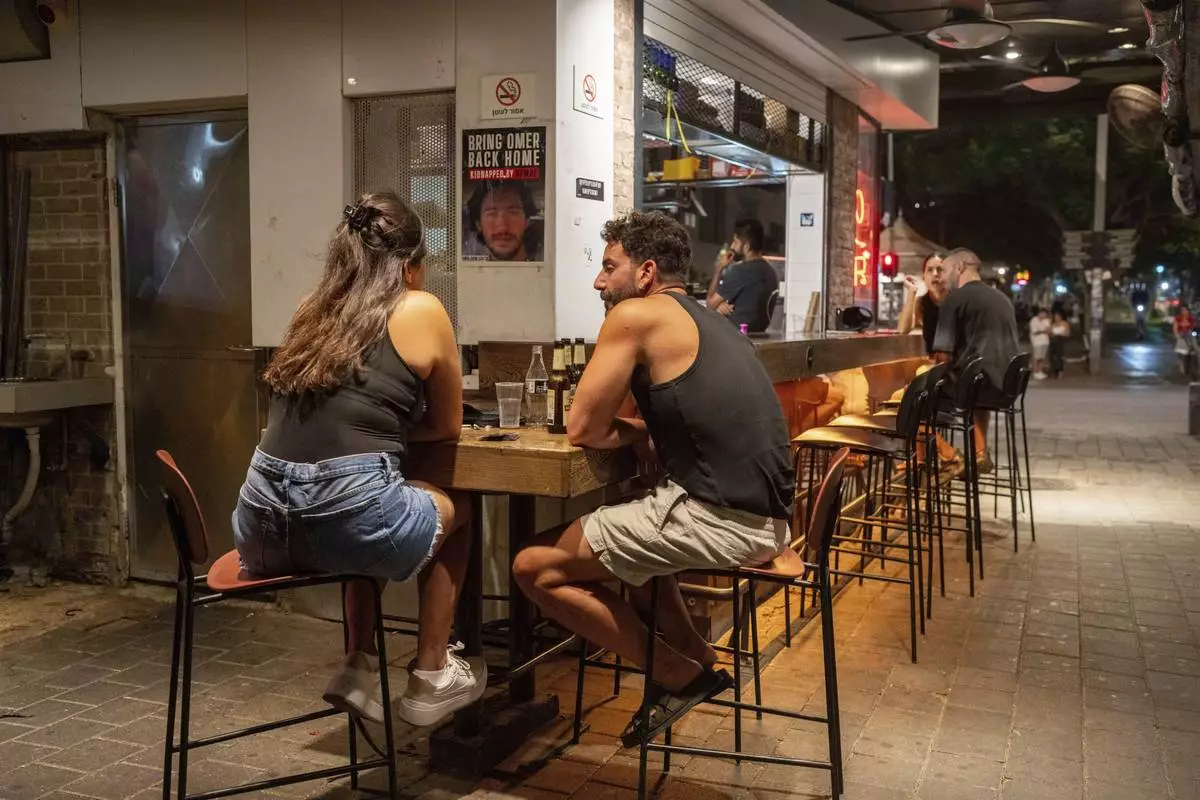
People sit in a bar near a sign calling for the release of hostages held in the Gaza Strip by the Hamas militant group for nearly a year, in Tel Aviv, Israel, Monday, Sept. 10, 2024. (AP Photo/Ohad Zwigenberg)
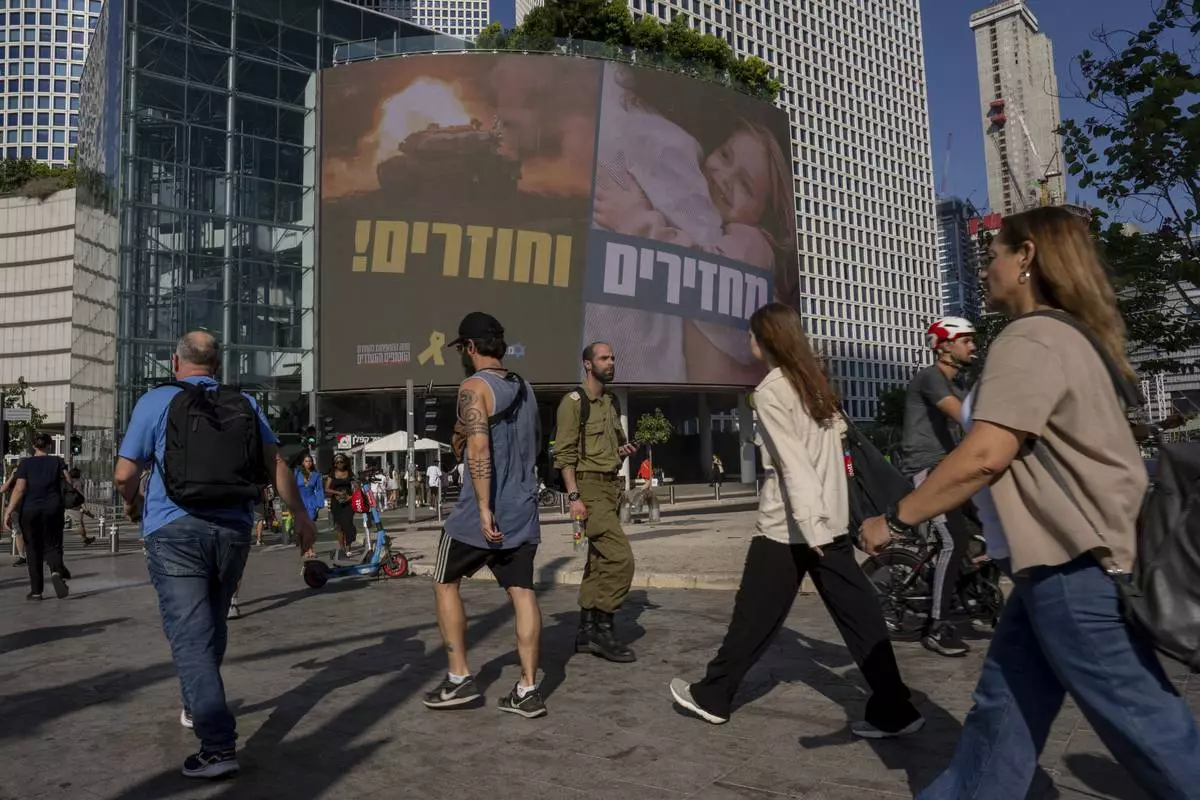
People pass by a sign calling for the release of hostages held in the Gaza Strip by Hamas for nearly a year, in Tel Aviv, Israel, Monday, Sept. 10, 2024. (AP Photo/Ohad Zwigenberg)
link