Published on
August 6, 2025 |

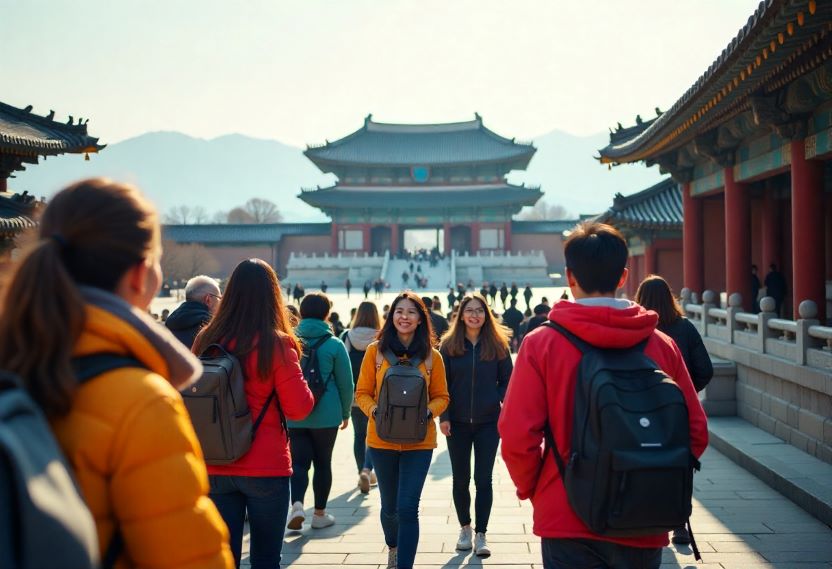
South Korea is set to boost its tourism sector by removing visa limitations for Chinese tourist groups. Travelers from China will be able to travel to South Korea visa-free starting from September 29, 2025, with expectant provisions remaining in place until June 2026. This move is especially aimed at helping tourism in the years preceding the APEC (Asia-Pacific Economic Cooperation) summit slated for the fall of 2025.
Strengthening Tourism Ties Between South Korea and China
Groups traveling from China will enjoy visa free access due to China’s reciprocal approach. China granted visa free access to Koreans and some foreign nationals in late 2024, which allowed for reciprocal measures. This policy looks to foster the bilateral relations of the two countries in tourism and economic cooperation.
This is viewed as a pivotal boost to South Korea’s tourism industry, which has slowly begun to recover post-pandemic. The new policy should boost travel from China, especially in early October with the Chinese holiday which will be an advantage to the South Korean economy.
A Key Move Ahead of the APEC Summit
The Gyeongju South Korea APEC summit 2025 is set to take place from October 31 to November 1, 2025. China’s President Xi Jinping and United States President Donald Trump, along with 21 other economic leaders from the region, will attend the Gyeongju APEC summit. The covered topics will include the most urgent economic and political issues facing the region which will simultaneously create great chances for diplomacy.
To foster South Korea’s tourism and business relationships with China, visa-free entry will be permitted during the APEC summit. This is expected to increase the flow of tourists and business travelers from China.
Encouraging Economic Growth Through Tourism
The South Korean Ministry of Tourism explained that their burnout issue is due to an overdependence on visitor numbers, so this time, they are attempting to improve South Korea’s economy, which is heavily reliant on tourism. The influx of Chinese tourists is a boon to the South Korean tourism industry, and the recent visa-free travel is expected to increase visits which is a boon for South Korean local businesses, hotels, and retail.
The decision of granting visa-free access is sensitive in timing; it must coincide with Chinese holidays in October and the other peak outbound holiday season in winter. The objective is to make South Korea a primary outbound tourism hub for Chinese travelers as international travel ramps up in the aftermath of the pandemic.
A Temporary Policy with Long-Term Benefits
The policy on visa exemption will be lifted in June 2026, which gives Chinese tourists plenty of time to explore South Korea. While Korea intends to mitigate the short-term impact of tourism, the long duration provided indicates plans to use this time as an infrastructural build for long-term tourism in the country.
This also fits into the wider context of inbound tourism which has been the focus for many nations. South Korea, Japan, China, and several other nations in the Asia-Pacific region appear to be focusing on tourism. The region is viewed as an area that could bolster the South Bay region to help facilitate tourism in Korea. This is crucial from the perspective of the upcoming global summits as well as to meet the rising interest in East Asia as a tourist destination.
Strengthening Diplomatic Ties and Cooperation
This visa policy will likely advance diplomacy and economic collaboration with China. Beyond tourism, this policy demonstrates the improving relationship between the two nations. South Korea and China have been strengthening economic ties, and the no visa requirement policy demonstrates goodwill and fosters collaboration in other sectors.
This policy may encourage other policies facilitating travel and cultural exchange. This policy reinforces other South Korea policies aimed at making the region a tourism and business center while working synergistically with other key global partners.
Global Trends in Visa Exemptions and Relaxed Entry Measures
South Korea is not the only country introducing visa exemptions and relaxed entry measures in 2025. Several other nations are also easing their visa policies to attract more international tourists:
- Philippines: In May 2025, the Philippines granted visa-free access to Indian tourists for stays of up to 14 days. This initiative is projected to strengthen relations between the two countries and enhance tourism along with air traffic between India and the Philippines.
- China:In July 2025, China offered visa-free access for tourists from 75 countries, including several European and Asian countries, in an effort to expand the tourism market and international relations.
- Russia and Oman: Both countries reached an agreement and ceased the need for a reciprocal visa, permitting citizens from both countries to visit for up to 30 days visa-free. This initiative, launched in July 2025 is designed to increase tourism and bilateral relations.
- Kenya: In July 2025, Kenya commenced the expansion of its visa exemption program to include 61 countries, with Ethiopia, Egypt, Nigeria, and Tanzania among the first. This policy grants a 90 to 180-day visa exemption and is designed to enhance tourism in the East African region.
These changes are indicative of a broader trend across the globe, where nations are introducing measures to simplify travel and encourage tourism as part of their economic recovery efforts.
Conclusion: A Bright Future for South Korea’s Tourism Industry
The visa exemption offered to Chinese tourists enhances South Korea’s position in the tourism industry, both geopolitically and economically. South Korea is ready to bolster its image by inbound tourism marketing to attract more visitors.
Their position is just before the APEC summit, which gives South Korea an opportunity to mend relations with China and gives a boost to the South Korean economy. This also puts South Korea in focus as a tourism center in the Asia-Pacific region.
They will now be able to easily visit Korea’s modern and cultural sites. This, in addition to the removal of pandemic-related restrictions, will greatly reshape global tourism.
The innovative 2025 tourism master plan for Korea aims to attract more Chinese tourists and is likely to set an example for other countries seeking to improve their international inbound tourism relations.

link