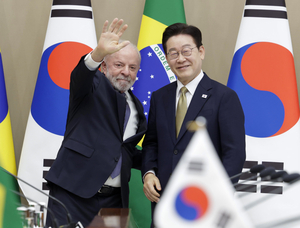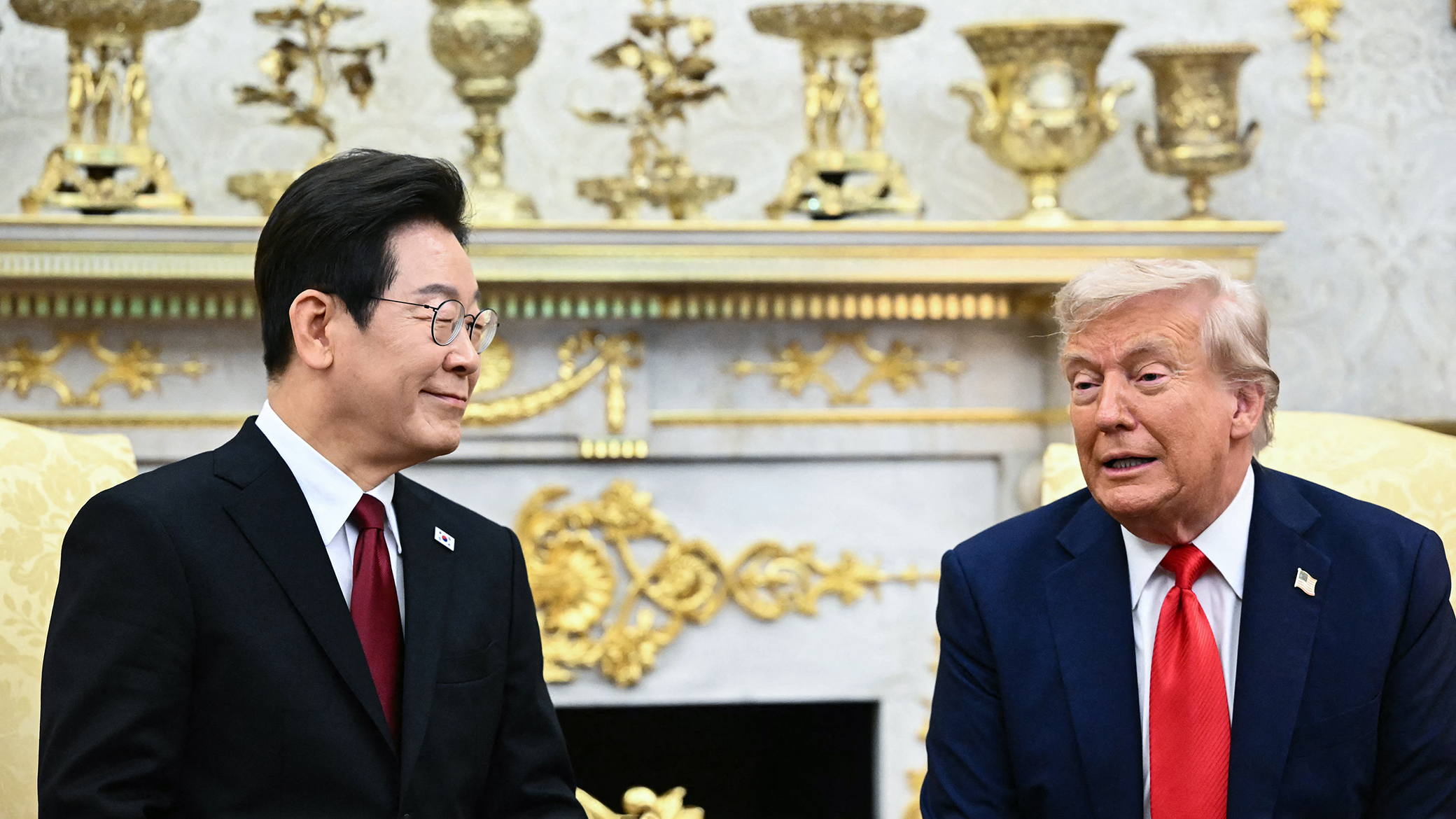
A unique set of circumstances, however, left South Korea ill-prepared to manage the onset of the new U.S. administration in January 2025. President Yoon Suk Yeol’s declaration of martial law, his subsequent impeachment, and the snap election of President Lee Jae Myung effectively left South Korea in political stasis for the first half of 2025 and, therefore, six months behind all other U.S. allies as President Trump began his second term with a slew of trade actions and executive orders. Even after Lee took office, the two leaders missed opportunities to meet in the summer of 2025 at the G7 summit and NATO leaders summit, leaving Seoul without the direct leader-to-leader interface enjoyed by other similarly affected allies deemed critical to negotiating relief from U.S. tariffs.
The Trump Administration’s Policies: Paradigm Shift
Two policies define the paradigmatic shift in the alliance. The first relates to Trump’s desire to reduce the U.S. military force presence on the peninsula. Currently, 28,500 U.S. ground troops in South Korea provide the trip wire deterrent at the heart of the U.S.-ROK mutual defense treaty, as well as the nuclear extended deterrence commitment. In May 2025, news reports surfaced of an administration plan to reduce the number of ground troops in South Korea, with the initial removal of one rotational brigade from the peninsula. The Pentagon denied the story, but there are a number of reasons to believe its veracity. First, as highlighted in a CSIS database, Trump has long questioned the need for U.S. troops abroad in Germany and South Korea, which he sees as expensive for the United States and as encouraging free riding by allies. Second, senior Pentagon officials prioritize deterrence and defense against China in the Taiwan Strait and in the first island chain and require South Korea to carry the burden of deterrence against North Korea.
The second paradigmatic shift in U.S. policy for South Korea relates to tariffs. Trump’s policies have thrust the trade relationship into an entirely new world. U.S.–South Korea bilateral trade (goods and services) was worth $239.6 billion in 2024, making the United States South Korea’s second-largest export market and South Korea the United States’ sixth-largest trade partner. Despite a successful FTA that took bilateral tariff rates to nearly zero, Trump targeted South Korea’s $66 billion merchandise trade surplus as validation that allies cheat the United States on trade while free riding off U.S. security guarantees. The April Liberation Day reciprocal tariff of 25 percent against South Korea took no account of the preexisting FTA; moreover, the impact on South Korea went far beyond the bilateral tariff. The Section 232 25 percent tariffs on steel and aluminum, the 25 percent tariffs on automobiles and auto parts, and the 25 percent tariffs on Mexico (from where South Korean plants export to the United States) all had a disproportionate effect on the country. The impact was immediate: South Korea’s car exports to the United States fell by 27 percent in May year on year, with overall exports to the United States falling by 8.1 percent year on year. While there are other issues in the alliance, these troop and tariff issues are of a scale never before experienced in the alliance, and Seoul, mired in its own political crisis, was unprepared to respond.
Responses from South Korea: Let’s Make a Deal
If the initial reaction by European and Canadian allies to Trump’s actions was outrage and resistance, South Korea’s response could be characterized as “let’s make a deal.” On the reciprocal tariffs, South Korea did not criticize its ally; it did not call out the United States for unduly violating the existing FTA, and it did not retaliate by raising its own tariff rates to 15 or 25 percent (from 0 percent). Instead, Seoul reached out proactively to identify the makings of a deal that would lower U.S. tariffs. From February to June 2025, South Korean senior trade officials, and even the national security adviser and foreign minister, shuttled to Washington almost weekly, even following Commerce Secretary Howard Lutnick and U.S. Trade Representative Jamieson Grier to Scotland to meet for late-night additional negotiations. There was arguably no U.S. trading partner that tried harder to make a deal. This resulted in a framework agreement announced by President Trump on July 30 that reduced the reciprocal tariff rate to 15 percent and lowered the sectoral tariff for automobiles and auto parts to 15 percent. South Korea promised a $350 billion investment fund for U.S.-owned companies—including $150 billion in shipbuilding—and an additional $100 billion in energy purchases from U.S. sources. The magnitude of these commitments spoke to South Korea’s willingness to make a deal to satiate its ally; $350 billion is 72 percent of the South Korean government’s budget this year, and more than 18 percent of South Korea’s GDP in 2024.
At the same time, Seoul has taken advantage of the Trump administration’s willingness to operate outside regular policy conventions to seek new opportunities for alliance cooperation that serve ROK interests. Most notably, the $350 billion investment package includes $150 billion for South Korean investment in U.S. shipbuilding. The commercial potential for joint ventures in shipbuilding, ROK-made components for U.S. ships, and maintenance, repair, and overhaul (MRO) have all been areas of commercial interest and strategic cooperation for South Korea, given the strength of its shipbuilding industry and the United States’ shipbuilding gap with China.
On security issues, the Lee government has avoided disagreement with Trump, instead identifying positive-sum solutions that advance U.S. and South Korean goals. The South Korean government maintained message discipline with the Pentagon’s denial of the veracity of the troop withdrawal reports. In return, when Trump was asked about the issue during the August 2025 summit meeting, he deflected the question to talk instead about North Korea. President Lee has also recognized the U.S. desire to see more South Korean alignment on security issues vis-à-vis China. In a public speech at CSIS following his meetings at the White House, Lee made a clear statement of Seoul’s position that aligned with U.S. interests, stating that although China and South Korea share “inevitable ties” because of geographic proximity, South Korea “cannot act or make decisions that go against America’s basic policy stance.” Furthermore, he said it’s “no longer possible” for South Korea to hedge between economic interests with China and security interests with the United States.
This position reflects South Korea’s understanding of its responsibility to minimize damage to alliance equities in the face of an “America First” posture that effectively throws custodial responsibility into Seoul’s hands.
link