The Korea Tourism Organization publishes “Travel these days,” a content that discovers new trends from the perspective of travelers.
These days, although not yet popularized in travel, it introduces domestic travel destinations or travel laws that are attracting attention first among sensuous travelers every other month.
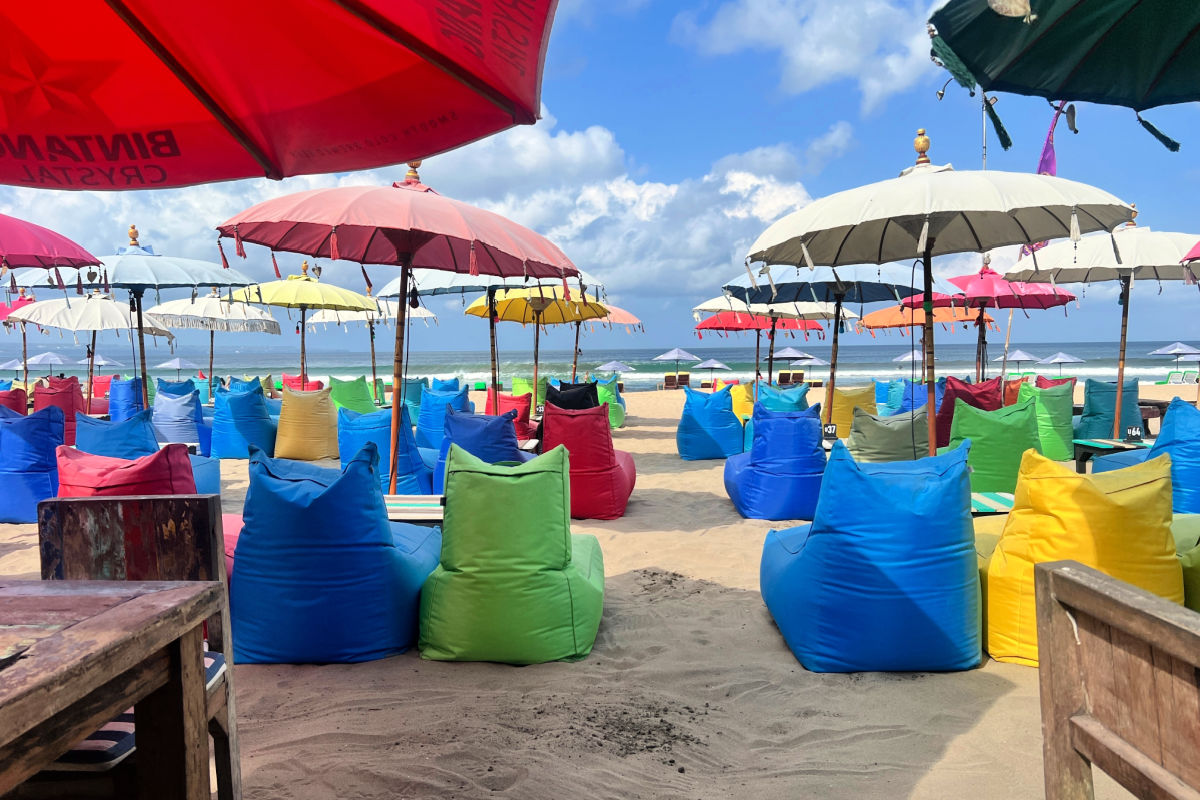
The first theme of travel these days is ‘marine tourism’. On the occasion of the “May Sea Moon,” the public corporation will showcase five marine tours that are full of senses these days.
Traveling to the sea has always been shown to be in high demand regardless of the season. According to the analysis of navigation data by the Korea Tourism Data Lab from March 2024 to February 2025, beaches and beaches were all ranked 1st to 10th in the natural tourist destination category.
Contents recommended by the public corporation as the most modern way to travel to the sea are △ horseback riding at Myeongsasimni Beach in Gochang △ Shindo and Shido Riding, Modo Art Tour △ Taean Gijipo Beach △ Busan Gwangalli SUP Yoga △ Hado Fishing Village Haenyeo Material Experience.
▶ The hidden treasure of Gochang, horseback riding on the beach in Myeongsasimni

On the west side of Gochang-gun, Jeollabuk-do, there is a wide white sand beach. Although there is no official name yet, there is a secret beach that has begun to go viral among local residents.
The local people call this place ‘Nyeongsimsimri Beach’. Myeongsasimni means that the beautiful sandy beach extends 10 ri (about 4 km), but in fact, the beach here is 8 km long, about twice as long as “Simni”.

What makes Myeongsasimni Beach special is the Hwigepam Gochang Beach Horse Racing Club. Anyone can easily learn horseback riding here and participate in an experience program that runs through forests and beaches.

The Huge Farm Gochang Beach Horse Racing Club, which first opened in 2013, operates a variety of programs tailored to horse riding skills and the number of experiences. If you participate in the experience program, you can also lend basic equipment such as horseback riding boots, protective vests, and helmets at no additional cost.
Reservations are required to participate in the horseback riding experience program at Hwigepam Gochang Beach Horse Racing Club. As it is an activity dealing with animals, it is necessary to comprehensively consider the condition of the horse, weather, and sea conditions.

In particular, the horseback riding program can be carried out only when the time of day is understood. The riding program runs from 10 a.m. to 5 p.m. every day. We are closed every Monday for horse rest.
Representative programs include △ basic horse riding experience looking back at the circular horse riding △ pine forest road △ beach ride △ beach ride + forest road ride that tours the beach and forest road at once.

If you set the time well, it is also possible to enjoy horseback riding while enjoying the Myeongsasimni Beach at sunset. Just enjoying the golden Myeongsasimri beach is ecstatic.
▶ The artistic sensibility of Shinto, Toshi, and Modo enjoyed riding
Shinto, Shido, and Modo are islands located between Yongyudo and Ganghwa Island in Incheon. The starting point of the trip to the three islands is Shindo, and it takes 10 minutes by boat from Sammok Dock. The Sammok Pier is also about 20 minutes away by bus based on Unseo Station (Airport Railway).

For riding enthusiasts, the round road around Shinto, Shido, and Modo is already a famous course. The three islands are connected by Yeongyo Bridge, making it very easy to move around. There are also quite a few tourists who want to walk around the island.
There is a company that can rent bicycles and bikes close to Shindo Pier. Due to the nature of the island road, there are many uphill roads, so you have to decide carefully when renting a bicycle.

The city is where the administrative agencies of the three islands gather. Bukdo-myeon office, post office, and resident convenience facilities are located here. As you exit the main street of the city, a quiet island scenery continues on both sides of the road that makes you comfortable.
Sugi Beach in the city has fine sand and beautiful scenery, and is also famous as a filming location for dramas. You can also experience kayaking and paddleboarding. It is a good place to take a leisurely walk on the beach ahead of the peak season.

When you cross Yeondogyo Bridge, you will find Modo. On the left side of the bridge entrance, you can see a unique sculpture on the rocks of the seashore, which is the work of Lee Il-ho, who created Modo Sculpture Park.
The place where you can see more of the works of artist Lee Il-ho is Baemi Octopus Sculpture Park in Modo. It is a place where dozens of works can be installed on the coast to enjoy the view of the sea and the appreciation of the works.

As it changed to high and low tides, tree-shaped works that gradually appeared after being partially submerged in seawater stood on the coast, and even human-like works varied. Airplanes landing over the sea toward Incheon International Airport are also seen from time to time.
▶ ‘Barefoot Youth’ Super Ashing Holy Land, Taean Gijipo Beach

“Earthing” is a compound word of earth and progressive (ing) and refers to the act of contacting bare feet and accepting the Earth’s energy.
A typical way is to walk barefoot. Static electricity in the body is released to the ground and the negative ion in the ground is received by the body. It is called ‘super ashing’ because walking on a moist dirt road or on a beach sand beach increases the ashing effect.
Super ashing is possible anywhere if you take off your socks, but the Taean Giseopo Exploration Center has increased the convenience of visitors by equipping them with a footrest and a shoe storage stand.

The Super Ashing section is 1.89km in total, and it is divided into two courses with the base artillery exploration center as a stopover. It is 1 course (1.09km) from the center to Sambong Beach and 2 courses (0.8km) to Changjeonggyo Bridge, which goes down toward Kkotji Beach.
It is a light walking course that can be completed in about two hours. It is all the more special because it is the only coastal national park in Korea and includes “Noreul-gil”, which is considered the highlight of the 170.3km Taean beach road.
It also enjoys the acupressure effect by stepping on the large water marks of the tidal flat.
It is interesting because each scenery you encounter while walking has a legend. In the past, there was an elderly fisherman who was in a hurry to raise money without taking care of his sick daughter.

The story goes to “Sambong Beach” that all three daughters died of illness and the graves of their three daughters became peaks. The tomb-shaped rocky mountain next to Sambong Peak is the incarnation of his wife.
The hole in the rock is called the “Yongnang hole” where a dragon who ascended to heaven with a handshake fisherman came out. Gangji Cave on the far left is a photo spot set in Haesik Cave, so let’s not miss it.

Gomsol, who plays the role of a windbreak forest, also walks with it on his side. As you walk, you find holes and grains of sand around you that are likely to have been pressed with a sharp pencil. This is called Gyeongdan.
Dalang crabs or yeolang crabs build houses and consume food, and Gyeongdan is a trace of absorbing and spitting organic matter from the sand.

Now walk toward Kkotji Beach, one of the top three sunset attractions in Korea. I wait for the red sun to fall between the rocks of my grandmother and grandfather.
Kkotji Beach has been selected as the “Top 100 Korean Tourism” for seven consecutive times so far this year, and has a sea garden worthy of the slogan of “Korea Garden Taean.” The ‘Taenan World Tulip Flower Fair’ will be held here.
▶ Extreme healing in the sea, Busan Gwangalli SUP Yoga

SUP is an abbreviation for stand-up paddleboarding, called “Cops” or “SUP” and conveniently referred to as “paddleboarding” in Korea.
It does not require difficult skills, so anyone can learn easily. These advantages are highlighted, and places where you can experience SUP are emerging across the country, and Gwangalli Beach is considered a representative SUP holy place.

In line with its reputation, the beach has a separate SUP Zone specialized for SUP experiences. It is a space where anyone from beginners to high-end people can enjoy paddleboarding comfortably, and has convenient facilities such as a shower and a board storage stand.

A company called Crazy Surfers will start the SUP yoga program in May. It runs two SUP yoga programs, one using paddleboards on the beach and the other floating paddleboards in the sea. For beginners, the former with a sense of stability is recommended.
The SUP yoga program doesn’t just do yoga. SUP basic education and experience are included. A professional instructor meticulously teaches you how to sit and stand, how to change direction, how to row, and how to stop.

After the theoretical training, we go to the sea immediately for practical use. Sit and ride first, then step on the board and stand up when you get used to the posture.
Beginners can stand on their own and paddle forward by repeating their falling out a couple of times. The SUP yoga program runs only on weekends from May 3 to November 16 and takes about two hours.
▶ Living as a haenyeo for a day, Haenyeo Material Experience in the Hado Fishing Village

Haenyeo, who dive into the sea to collect seafood, are preserved as National Important Fisheries Heritage No. 1 by the Ministry of Oceans and Fisheries in 2015, UNESCO Intangible Cultural Heritage Representative List in 2016, and National Intangible Cultural Heritage in 2017.
Jeju Island, the home of haenyeo, has long been known as “Samdado Island” due to its large number of winds, stones, and women. Here, the woman refers to a haenyeo.

In addition to Jeju Island, haenyeo is distributed in Busan, the South Sea, and the East Sea coast, and can be found in Japan, Southeast Asia, and Russia.
However, since the word haenyeo appeared in the Japanese colonial era, Jeju Island calls it “jomnyeo” or “jomnye” or “jomnye” or “go to materialize.”
The place with the highest number of current haenyeo in Jeju Island is Hodo-ri, Gujwa-eup. Hado-ri is a coastal village located about 40km east of Jeju-si, and is a popular spot that is adjacent to Udo, Seongsan Ilchulbong Peak, Jimmybong Peak, and Bunny Island and does not miss the trip to the east of Jeju.

According to a survey by the Jeju Provincial Office’s Haenyeo Cultural Heritage and Haenyeo Policy Team, as of the end of 2024, the total number of haenyeo in Jeju Island was 2,623, of which 186 people, or 7% of them, lived in Hado-ri.
Haedo Fishing Village Haenyeo Material Experience” is a five-sensory experience program in which haenyeo material experience wears the same equipment as current haenyeo with more than 40 years of material experience, acquires seafood in the sea, collects it, and samples the caught seafood.”

The Haenyeo Material Experience in the Hado Fishing Village will be held twice a day (10:30 a.m. and 2 p.m.) from April to October for about two hours. The start time can vary by about 30 minutes depending on the time of the water.
You just need to bring a swimsuit, clothes to change, and shower supplies to wear in the suit, goggles, flippers, and tawak (a fishing gear that relies on the body during the material), a mesh fish (a fishing gear for collected seafood), a bar window (a flat and elongated iron tool used to remove abalone), and a kkakuri (a fishing gear used to collect seafood growing in a rock gap).
In addition to the material experience, you can also enjoy fishing, bamboo fishing, snorkeling, and round-dam experience by collecting seafood with your bare hands in the shallow sea.
link